Is Mold From Water Damage Dangerous?
Understand what mold after water damage can mean, what to do first, and when the moisture problem needs qualified help.
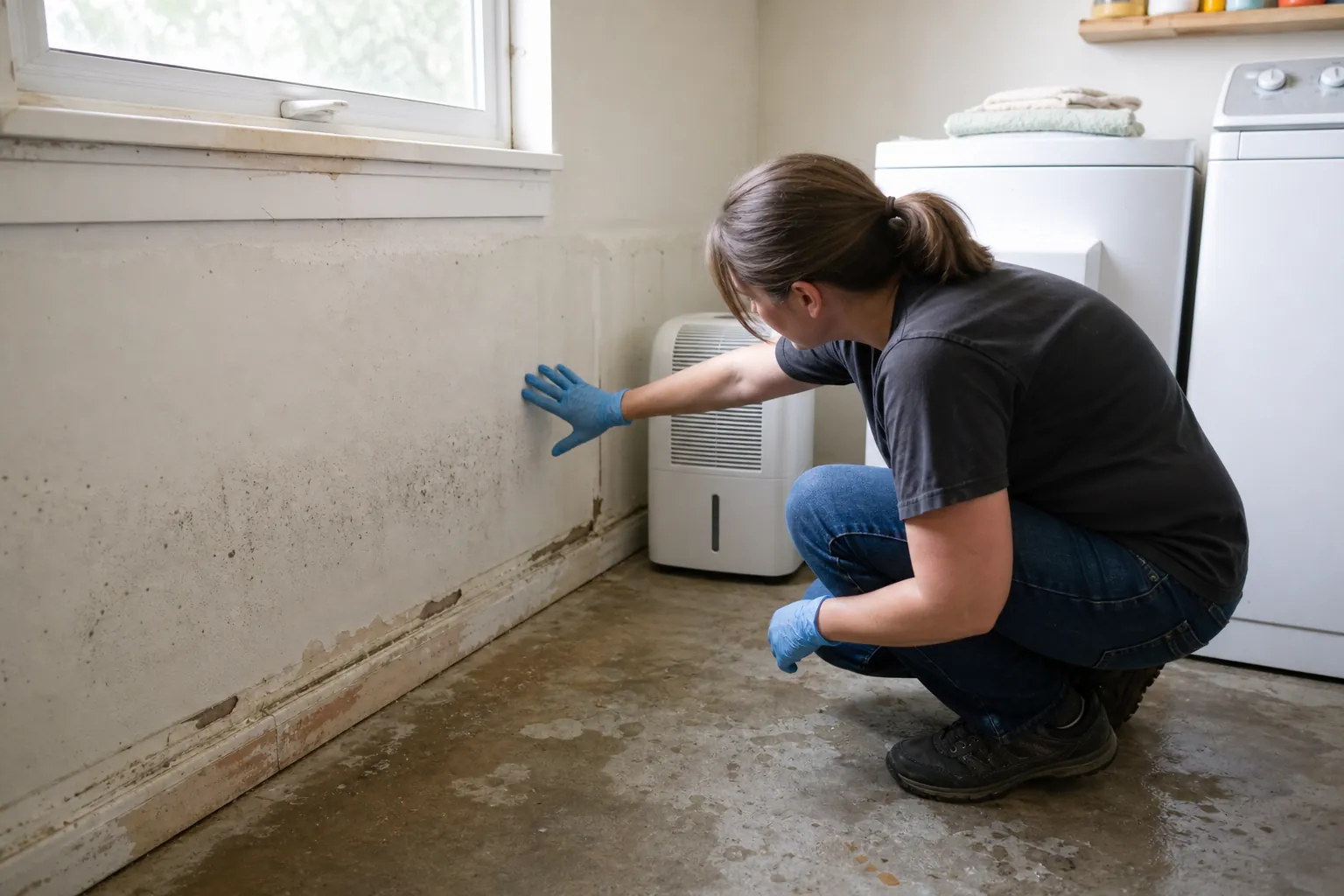
Seeing spots on a wall, smelling something musty after a leak, or finding damp material behind an appliance can make any homeowner worry about mold. The useful response is not panic or a quick coat of paint. Mold after water damage means moisture has been available long enough for a problem to develop, so the first job is to make the area safe, stop the water source, and understand what actually got wet. Some situations are small and contained. Others need help because the water source, affected materials, or cleanup risk is not clear. This guide explains how to tell the difference and what to do next.
The Short Answer
Mold from water damage can matter because it is evidence of a moisture problem that needs to be corrected. The Centers for Disease Control and Prevention explains that exposure to damp and moldy environments may affect people differently, and that if mold is growing in a home, the mold should be cleaned up while the moisture problem is fixed. That is a more useful starting point than trying to identify a mold type by color or deciding that every small spot is the same emergency.
A small patch on a dry, accessible surface after a minor clean-water leak is different from a room with a persistent odor, soft drywall, a growing stain, sewage or floodwater, or water near electrical equipment. The right next step depends on the source, how long materials stayed wet, what materials are affected, and whether you can safely inspect the area. If you are still dealing with active water, start with the site's emergency water cleanup guidance before you think about cleaning or repairs.
Do not wait for a dramatic black patch to take a water concern seriously. Mold can appear in many colors, and a musty smell or recurring stain can be a clue even before you can see growth. The goal is to prevent further moisture, protect the home, and avoid closing up a wet material behind fresh paint, flooring, or drywall.
What Mold After Water Damage Tells You
Mold needs moisture to grow. A leak from a pipe, roof, window, appliance, or HVAC component can wet drywall, insulation, carpet padding, wood, and other porous materials without leaving a visible puddle. The CDC notes that mold can grow around leaks in roofs, windows, or pipes and after flooding. That makes the water path more important than the mold's color or pattern.
Look for a change that is new, repeating, or tied to a trigger. A musty smell after rain, paint bubbling beside a shower wall, a damp cabinet below a sink, or a stain that worsens after a washing-machine cycle gives you a better starting point than a single glance at the surface. The site's guide to early wall water-damage signs can help you identify safe clues around baseboards, trim, flooring, and nearby plumbing.
Mold is not the only explanation for a stain or odor. Dirt, old water marks, poor ventilation, a dry drain trap, and previous repairs can all create confusing clues. Still, an unexplained odor or recurring finish damage is a reason to investigate moisture rather than conceal the surface. The site's water-damage smell guide explains how to use odor as a clue without treating it as a diagnosis.

Health Concerns Without Guesswork
It is reasonable to take damp or moldy conditions seriously without making medical assumptions. The CDC says damp and moldy environments may cause a variety of health effects, or none at all. Some people may have more trouble with irritation or allergy-like symptoms, while others may notice no change. If anyone is having concerning symptoms, especially breathing trouble, seek medical advice rather than relying on a home inspection article.
Do not use a mold color as a safety test. A dark spot is not automatically a particular type of mold, and a light-colored patch is not automatically harmless. The CDC's guidance is practical here: the response should focus on cleaning up mold and fixing the moisture problem, regardless of type. A visible patch can be only part of the picture if moisture has reached insulation, the back of drywall, carpet padding, or flooring.
There are also situations where the cleanup question is secondary to immediate safety. Stay out of areas with standing water near outlets, appliances, electrical panels, or a sagging ceiling. Do not disturb material affected by sewage or floodwater as though it were an ordinary household cleaning task. For a contaminated toilet event, use the site's toilet-overflow cleanup guide to understand why the response differs from a clean supply-line leak.
Start With the Water Source
Cleaning a visible spot without correcting the source is a temporary cosmetic step. Start by asking what changed before you noticed the issue. Did the area become worse after rain, a shower, a toilet flush, a dishwasher cycle, a washing-machine load, or use of an air conditioner? Is there a bathroom, kitchen, laundry room, water heater, attic, or exterior wall on the other side of the affected area?
Check only what you can reach safely from a dry location. Look under sinks, around accessible shutoff valves, at cabinet bottoms, beside toilets, near appliance connections, and along baseboards for fresh drips, swelling, or a wet floor edge. Do not move a heavy appliance, open a wall, reach behind wet equipment, or climb into an unsafe attic just to find the source. A qualified plumber, roofer, or appliance technician may be the right person to stop the cause before a drying or cleanup conversation begins.
Take wide and close-up photos before cleaning, painting, or removing materials. Write down the date, likely trigger, and any visible change. This record can help a repair professional understand the problem and gives you a way to compare the same location after the next rainfall or normal appliance cycle. If an appliance may be involved, the site's appliance leak cleanup guide explains how to separate source repair from the drying and documentation decisions that follow.
Drying Matters More Than a Dry-Looking Surface
Once the source is controlled and the area is safe, drying becomes the next priority. The U.S. Environmental Protection Agency advises drying water-damaged areas and items within 24 to 48 hours when possible to help prevent mold growth. That timing is helpful, but it is not a promise that a room is fine because it feels dry after a day. Drywall, insulation, wood framing, flooring underlayment, and carpet padding can hold moisture after the outer surface feels normal.
For a small clean-water situation with stable materials and a fixed source, controlled airflow and dehumidification may support drying. They do not prove that a wall cavity is dry, make an active leak safe, or solve contamination. Do not aim a fan into a damaged wall, keep drying equipment running while the stain worsens, or replace finishes before you know the moisture question is resolved.

The site's water-extraction overview explains why removing visible water and confirming that building materials are dry are separate parts of recovery. That distinction protects homeowners from paying for a cosmetic finish before the underlying water issue is understood.
When Cleanup May Need Qualified Help
Get qualified help when the source is unclear, water is still active, the material is soft or bulging, the odor returns, visible growth is widespread, water reached hidden areas, or the event involved sewage or flooding. The same applies when the concern is near electrical equipment, below a sagging ceiling, or behind a heavy appliance or finished wall that you cannot safely inspect.
A thorough assessment should explain the likely source, which materials are affected, how moisture will be checked, what can stay, and what needs removal or replacement. It should also separate source repair, water removal, drying, cleanup, and cosmetic reconstruction. Those are different jobs, and a clear scope helps you evaluate what is actually necessary.

US Water Damage Pros helps homeowners understand the service categories they may hear about after a water event, including extraction, structural drying, remediation, and repair. Review the service overview, or call 1-877-264-7045 when the situation is urgent or the next step is unclear.
Questions to Ask Before Work Starts
Water damage can create pressure to make a fast decision. A provider should still be able to explain the proposed work in plain language. Ask what they believe caused the moisture, whether the source is already stopped, and which materials they believe are affected. A useful answer separates what is known from what still needs to be checked.
Then ask how drying will be evaluated, which materials can remain in place, which ones may need removal, and what finding would change the work scope. If cleanup follows a flood or sewage event, ask how contamination changes the approach. If an insurance claim may follow, keep your photos, notes, and receipts, and review the site's water-damage insurance claim guide before you discard damaged property or accept a broad repair plan.
Clarity is not a promise that every job will be small. It is how you avoid approving an unclear project based only on a visible stain or a musty smell. Knowing the source, affected materials, and drying plan gives you a more solid basis for deciding what needs attention now and what can wait until conditions are stable.
Do Not Hide the Clue Before You Understand It
Paint, caulk, air freshener, carpet powder, and a quick patch can make a room look better without telling you whether moisture remains. A returning stain or odor after repainting is not simply a finish problem. It is a reason to look again for the source and affected materials.
The same principle applies to ceiling damage. A ceiling stain can be dry and stable, or it can be the path water took from a room, appliance, roof, or pipe above. If that is where you see the problem, read Water Stain on Ceiling: What It Means and What to Do before you repair or repaint it.
Homeowners do not need to turn every small mark into a major project. They do need to avoid treating a visible clue as proof that the hidden conditions are resolved. Document it, find the likely water path, stop the source, and make a drying decision based on the actual situation.
A Simple Next-Step Checklist
- Make the area safe: Stay clear of standing water, electrical hazards, soft floors, and sagging walls or ceilings.
- Document what you see: Take wide and close-up photos before cleaning, painting, or moving damaged materials.
- Notice the trigger: Record whether the issue follows rain, plumbing use, an appliance cycle, or a spill.
- Check accessible clues: Look at baseboards, cabinet bottoms, floor edges, and visible plumbing without opening walls or moving heavy equipment.
- Stop the source: Use the right repair professional for the likely cause, such as a plumber, roofer, or appliance technician.
- Dry before rebuilding: Do not repaint, seal, or replace finishes until the source is fixed and affected materials are dry and stable.
- Ask for help when the scope is unclear: Recurring moisture, contamination, hidden damage, and safety concerns are all reasons to bring in qualified help.
Frequently asked questions
Is mold after water damage always dangerous?
Mold after water damage is a reason to correct the moisture problem and clean up the affected material. People can react differently to damp or moldy environments, so do not use the color or type of mold as a shortcut for deciding whether the situation matters. Focus on stopping the water, keeping people out of unsafe areas, and getting appropriate help when the source, extent, or cleanup is unclear.
How quickly can mold grow after water damage?
There is no single clock for every home, but wet materials should be dried as soon as possible. The U.S. Environmental Protection Agency advises drying water-damaged areas and items within 24 to 48 hours when possible to help prevent mold growth. A stopped leak and a dry-looking surface do not always mean hidden materials are dry.
Can I clean mold after a small leak myself?
A small, isolated area from a clean-water leak may be manageable when the source is fixed, the material is sound, and there is no safety concern. Do not treat ordinary cleaning as a solution for sewage, floodwater, a large affected area, soft drywall, recurring moisture, or damage you cannot safely inspect. In those situations, ask for qualified help.
Should I test mold before fixing water damage?
Testing does not replace finding and fixing the moisture source. If you can see or smell mold, the practical priority is to correct the water problem and decide how affected materials should be cleaned, dried, or removed. A qualified professional can explain whether a particular assessment is useful for the situation.
Related posts
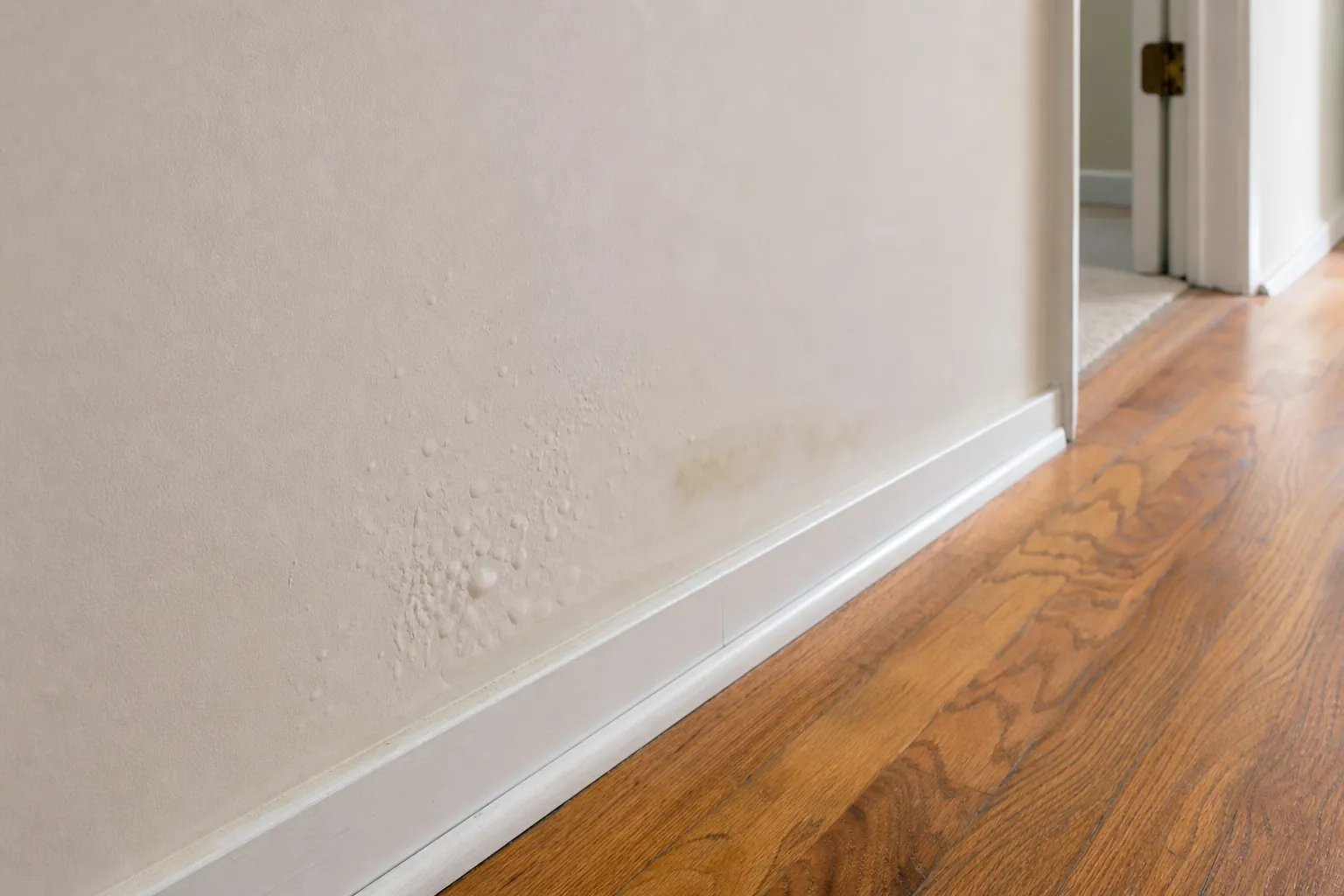
Early Signs of Water Damage in Walls
Learn how to spot wall moisture early, check likely sources safely, and decide when drying or qualified help is the right next step.
Read the guide →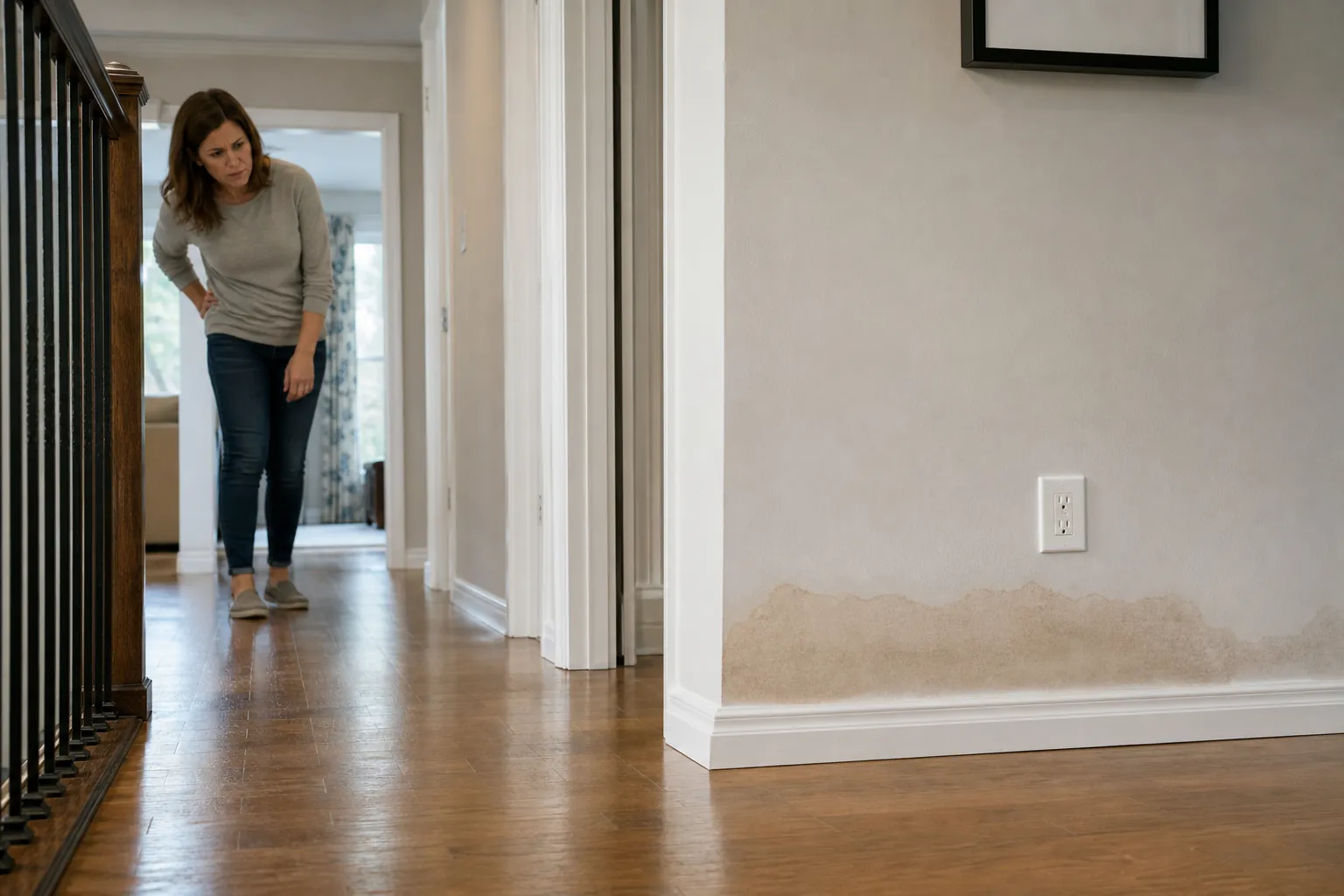
Water Damage Smell: What It Means and What to Do
A persistent musty odor can point to hidden moisture. Learn how to investigate safely, what not to do, and when drying or qualified help is needed.
Read the guide →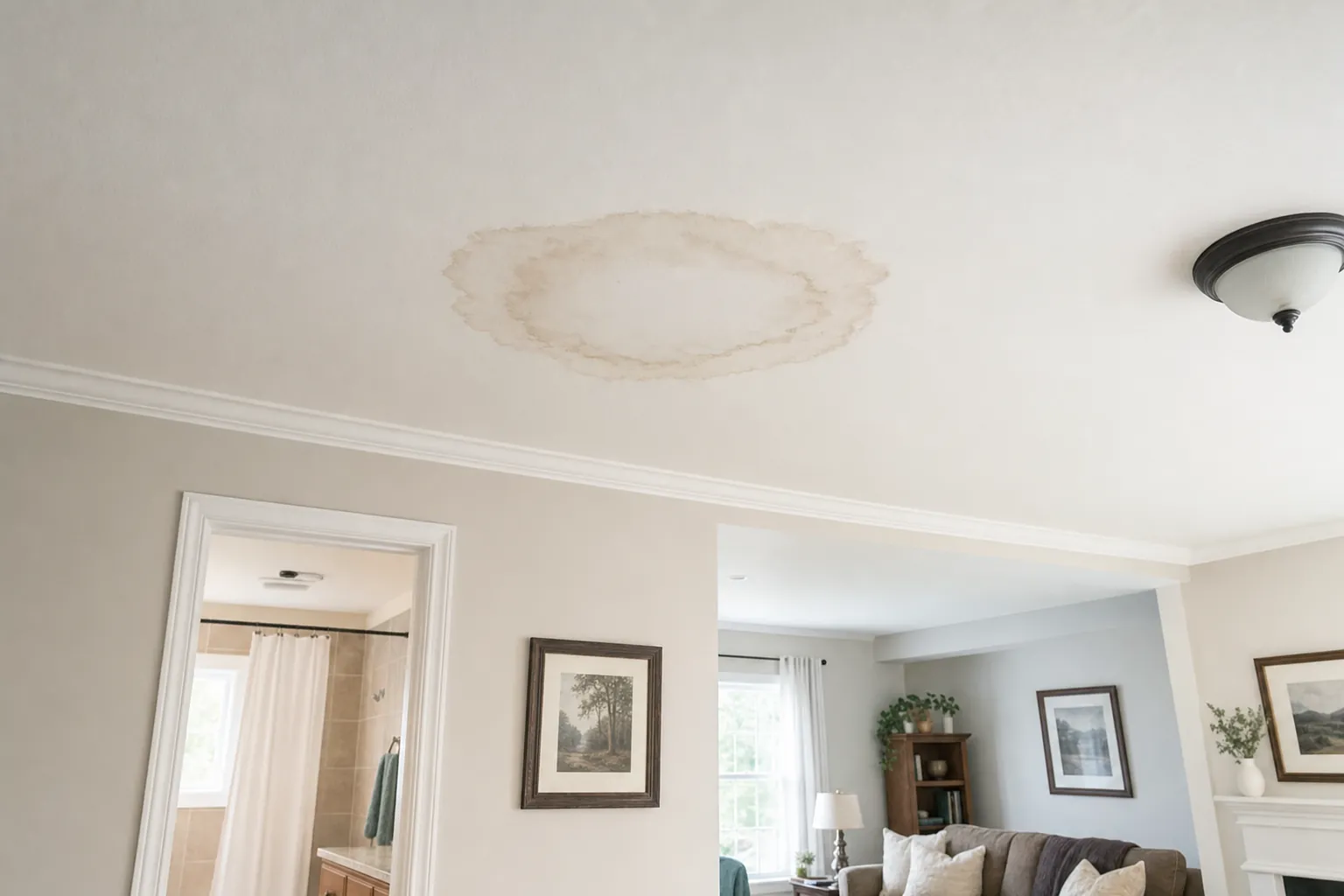
Water Stain on Ceiling: What It Means and What to Do
Learn what a ceiling water stain can signal, how to judge the urgency, and the safer next steps before repairing or repainting.
Read the guide →