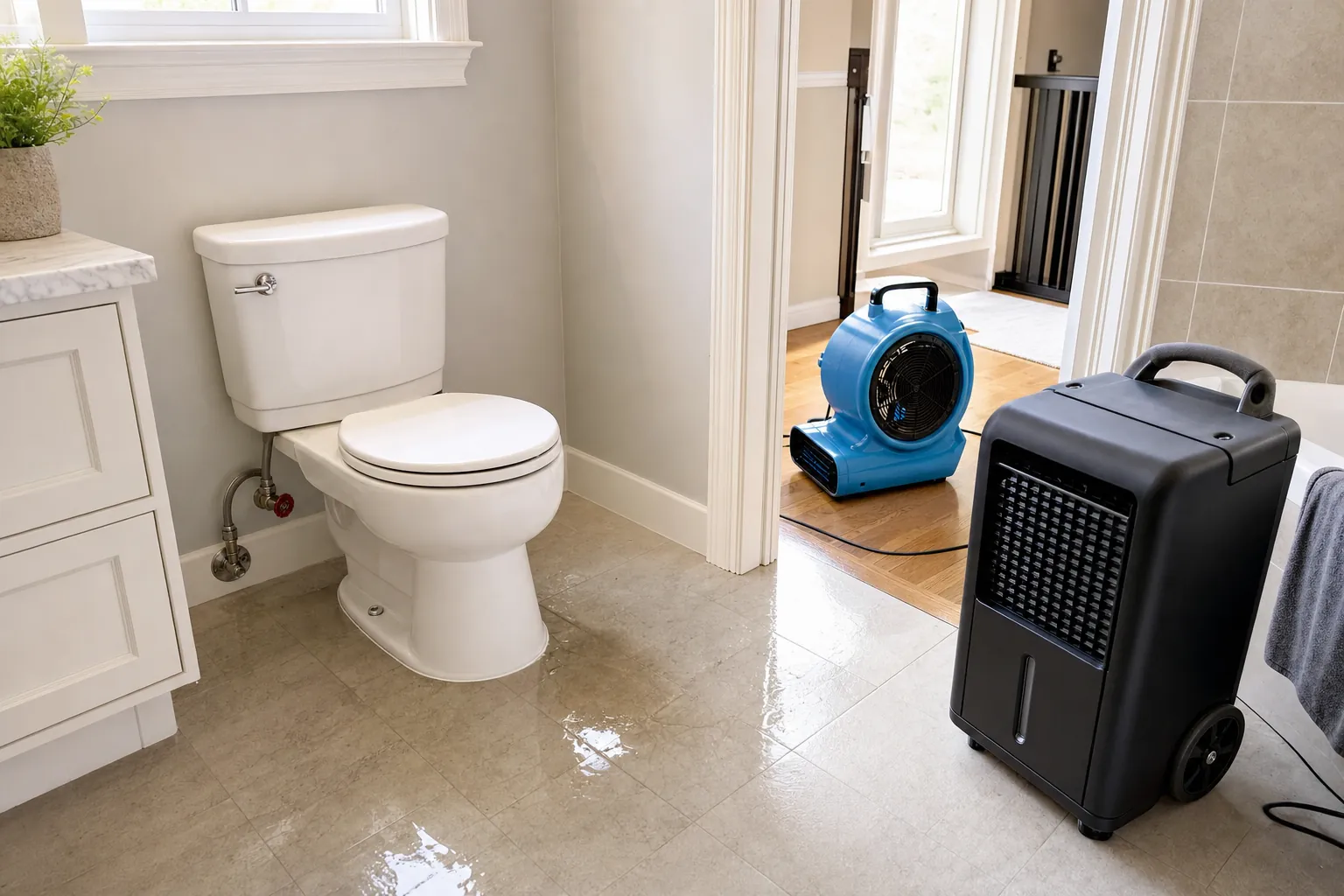
What to do right after a toilet overflows.
Keep people and pets away from the bathroom and nearby rooms. Do not step into water near outlets, extension cords, appliances or electrical panels. A bathroom floor can become slippery quickly, and water that reaches a doorway, heating vent, vanity, flooring seam or ceiling below can affect more than the visible puddle.
If the toilet is still filling and you can reach the shutoff valve without standing in water, turn it clockwise to stop the supply. If you cannot reach it safely, close the bathroom door if that helps keep water from spreading, move back from the area and get qualified help. The first goal is to prevent injury and limit the spread, not to start cleaning immediately.
- Stay out of water near electrical equipment or a sagging ceiling.
- Stop the toilet supply only when the shutoff valve can be reached from a dry, safe position.
- Keep bathroom water, footwear and wet belongings from moving into clean rooms.
- Take a few photos from a dry area before cleanup changes the water path.
- Get a clearer assessment when the source, contamination risk or spread is uncertain.
Work out whether the water may be contaminated.
Not every toilet overflow has the same risk. A bowl that overflowed from a simple blockage before it was used can be different from a backup involving waste, a sewer line, a drain problem or water that has travelled from another fixture. The condition of the water and where it reached changes the cleanup questions.
Do not assume clear-looking water is harmless after it has moved across a bathroom floor, into a hallway or onto porous materials. If the source is unclear, there is visible waste, the toilet backed up repeatedly or water came up through another drain, treat it as a situation that needs a more cautious response.
- Was the overflow limited to the bowl, or did water reach the floor, hallway or an adjacent room?
- Was the toilet being used, and did another fixture or drain also back up?
- Did water reach carpet, drywall, trim, cabinets, vents, flooring seams or a ceiling below?
- Has the water source been stopped, and is a plumbing repair still needed?
Document the scene without delaying safety steps.
From a dry, safe place, take a few wide photos and a short video of the bathroom, water path, affected flooring and anything that may have been exposed. Then capture close photos of water lines, wet baseboards, bath mats, cabinet edges, adjoining thresholds and any water visible in a room below. This gives you a record before cleanup, moving items or repairs change what can be seen.
Write down when you found the overflow, which fixture was involved, whether there had been a plumbing problem or drain issue, and what you did to stop further water. Keep receipts for reasonable emergency measures. If you plan to speak with an insurer, ask what it needs documented before throwing away affected materials or authorizing repairs.
Keep clean areas separate from the affected bathroom.
A careful response prevents wet or potentially contaminated materials from being carried into the rest of the home. Do not walk back and forth from the bathroom to clean rooms in the same footwear. Keep dry towels, clean belongings and replacement materials outside the affected area until you know what needs to be cleaned, removed or dried.
If water crossed into carpet, a hallway, a bedroom, a closet or a finished room below, do not judge the damage by the surface alone. Moisture can move under flooring, behind baseboards, into padding, around a vanity or through a ceiling cavity. Ask how the water path will be assessed and what will confirm that those materials are ready for repair.
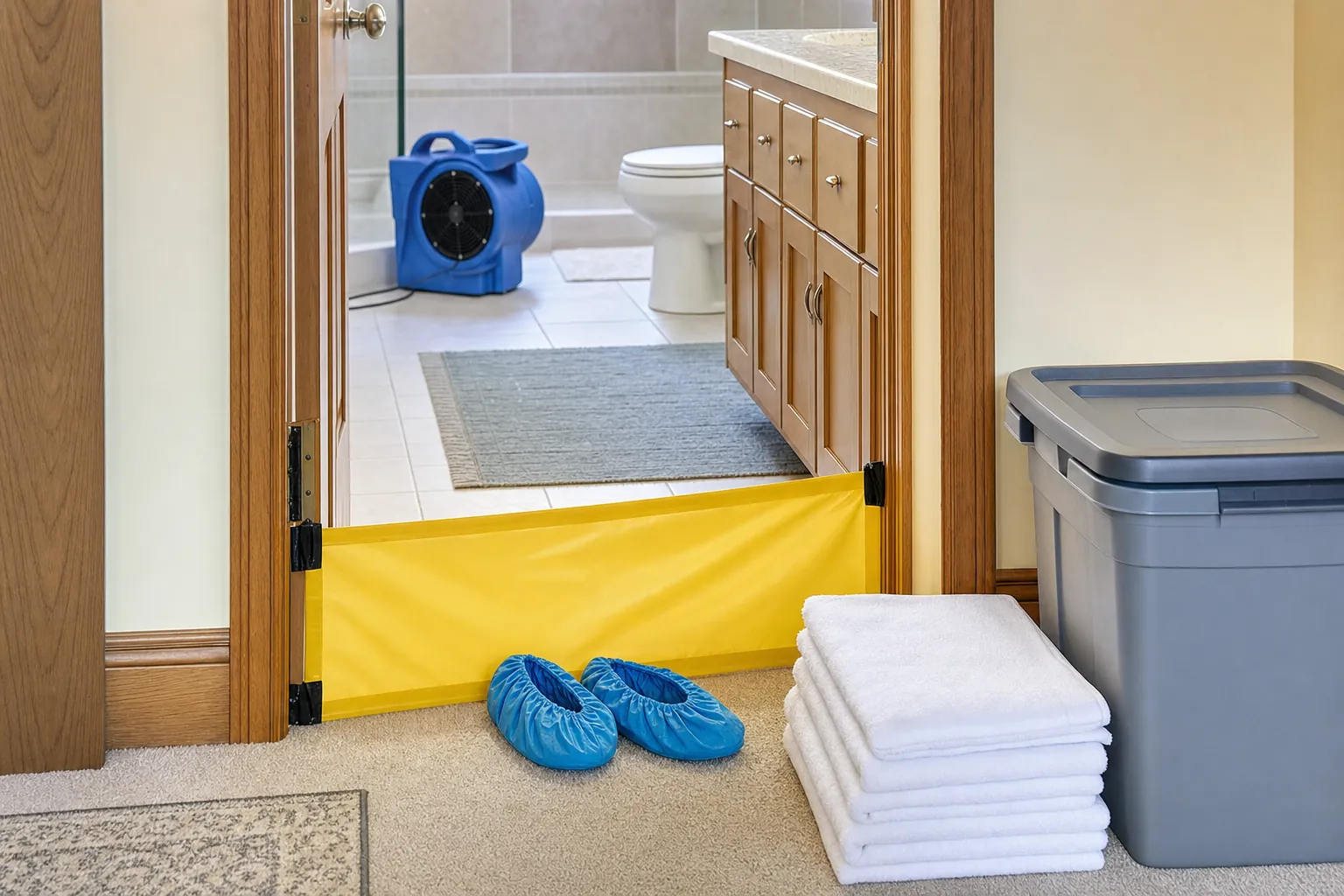
Ask for a cleanup and drying plan you can understand.
A useful cleanup discussion should separate what is known from what still needs assessment. The provider should explain the likely water source, affected rooms and materials, any contamination concerns, the immediate containment work, the drying approach and the point when repair work can begin. It should also explain what could change the scope and how those changes will be approved.
Ask what will be cleaned, removed, dried or monitored, and how progress will be checked before closing walls, installing flooring or repainting. A plumber may need to address the cause of the overflow separately from the work that handles the water already in the home.
- What water source and contamination concerns are being considered?
- Which materials can be cleaned or dried in place, and which need removal or further evaluation?
- How will the bathroom and any adjacent areas be kept separate from clean parts of the home?
- How will moisture be checked before new flooring, trim, drywall or paint is installed?
Do not rush the rebuild or claim decision.
Fresh paint, new trim or replacement flooring can make a bathroom look normal before hidden moisture or the plumbing cause has been resolved. Ask what confirms the cleanup stage is complete and who is responsible for the source repair, final drying check and any rebuilding work.
Insurance coverage depends on the policy and the cause of the loss. Contact your insurer early if you may make a claim, then keep your photos, notes, estimates and receipts together. You can take reasonable safety steps while you wait for instructions, but avoid discarding documented items or approving a broad scope before you understand what it includes.
Frequently asked questions
What should I do first after a toilet overflows?+
Keep people and pets away from the area. If you can safely reach the toilet shutoff valve without stepping in water, turn it clockwise to stop the supply. Document the water path from a dry location, avoid spreading water through the home and seek qualified help when the source, contamination risk or extent of damage is unclear.
How do I clean up a toilet overflow?+
Start by stopping further water only when it is safe, keeping people and wet materials out of clean areas, and documenting the water path from a dry position. A small contained spill can be different from water that reached porous materials, adjoining rooms, a ceiling below or a drain system with an unknown backup. Do not treat potential wastewater like a normal clean-water spill.
Does a toilet overflow always need restoration work?+
Not always. The needed response depends on the water source, how far it travelled, the materials involved and whether moisture reached places you cannot see. When water leaves the bathroom, touches porous finishes or may be contaminated, ask for a clear assessment before cosmetic repairs begin.
Should I call a plumber or a cleanup provider?+
A plumber addresses the fixture, drain or supply-line cause. A cleanup provider addresses the water that has already affected the home. Some situations need both conversations. Ask each professional to explain what is included in their work and what still needs to be handled by someone else.