Toilet Overflow Through Ceiling: What to Do Next
When toilet overflow water reaches a ceiling below, keep the area clear, document the damage, and understand when cleanup, drying, and repairs need qualified help.

A toilet overflow that reaches the ceiling below is no longer just a bathroom cleanup. Water may have moved through the floor, around pipes, into insulation, and across the back of the downstairs ceiling before you see a stain or drip. The goal is not to make the ceiling look better quickly. The goal is to keep people out of harm's way, stop additional water, document what happened, and make sure affected materials are properly evaluated before repair work hides the problem.
The right next step depends on whether the ceiling is stable, whether water is still moving, and what caused the toilet to overflow. A clean supply-line leak calls for a different response than water that escaped from the bowl or a sewer backup. This guide helps you make the first decisions without guessing.
1. Make the downstairs room safe first
Start below the bathroom, where the ceiling shows the damage. Keep people away from a ceiling that is bowed, sagging, cracking, actively dripping, or swollen. Wet drywall can become very heavy and may lose strength quickly. Move valuables from the area only when you can do so without standing under the damaged spot. A container beneath a small, steady drip can protect the floor, but do not press on the ceiling or try to support a bulge from below.
Water near a ceiling light, fan, outlet, or electrical device changes the urgency. Ready.gov advises against touching wet electrical equipment or equipment while standing in water. If the electrical panel is safely accessible without entering a wet area, turn off power to the affected room. Otherwise, leave it alone and seek qualified help. Call emergency services when there is an immediate danger.
Do not let the urgency of the mess push you into an unsafe shortcut. The lower room gives you the first warning that water has traveled beyond the bathroom. Treat a bulging ceiling, active drip, or electrical concern as a safety issue before you treat it as a repair project.
2. Stop the overflow without spreading the problem
Once the downstairs area is clear, focus on preventing more water from entering the building. Do not flush the toilet again. Stop use of the bathroom until the cause is understood. If the toilet is still running, shut off the toilet's supply valve if it is easy to reach without stepping into contaminated water. If a blockage or backup caused the overflow, a plumber may need to clear the line before anyone uses connected fixtures.
The visible ceiling damage does not tell you exactly how much water moved through the floor assembly. Water can follow joists, pipes, wiring, or gaps around penetrations, then appear at a low point in the ceiling below. That is why a stain may be offset from the toilet itself. The site's toilet overflow cleanup guide covers the immediate bathroom response in more detail.
Keep doors to affected rooms closed when practical, especially if water escaped from the bowl or a backup. Avoid carrying wet items through clean areas. A simple boundary helps limit tracking and gives you a clearer view of where the damage has spread.

3. Treat water that left the bathroom with care
Not every toilet overflow carries the same risk. A small amount of clean water from a supply issue is different from water that escaped after contact with the bowl, a clog, or a sewer backup. Once water has reached the floor, ceiling below, or porous materials, it is wise to be cautious about what those materials may have absorbed.
The U.S. Environmental Protection Agency advises calling a professional experienced in cleaning and fixing buildings damaged by contaminated water when sewage or other contaminated water is involved. Its guidance also emphasizes correcting the water problem and drying the affected area completely. That is particularly important when water has moved into materials you cannot inspect from the bathroom floor.
Do not assume that a ceiling looks fine because the visible mark is small. Insulation, drywall, flooring layers, trim, and nearby walls can hold moisture even after the floor surface has been wiped. When contaminated water may be involved, a qualified assessment is a more reliable next step than a cosmetic patch.
4. Document the path of the damage before cleanup
Before cleaning aggressively, take clear photos and short videos of the toilet area, any water on the floor, the ceiling below, damaged belongings, and the route water may have taken. Include wide shots that show the room and close shots that show stains, drips, peeling paint, or cracks. Note the time you discovered the overflow, whether the toilet was used or running, and each action taken to stop further damage.
Keep receipts for reasonable emergency measures and save the contact details for anyone who assessed or repaired the plumbing. This record gives a plumber, insurer, or cleanup company a much clearer starting point. The site's water damage insurance claim guide explains what to collect before discussing coverage.
Documentation is also useful after repairs begin. If a stain grows after the toilet is fixed, your first photos show whether moisture is still moving through the ceiling or a nearby wall.

5. Read the ceiling before deciding what it needs
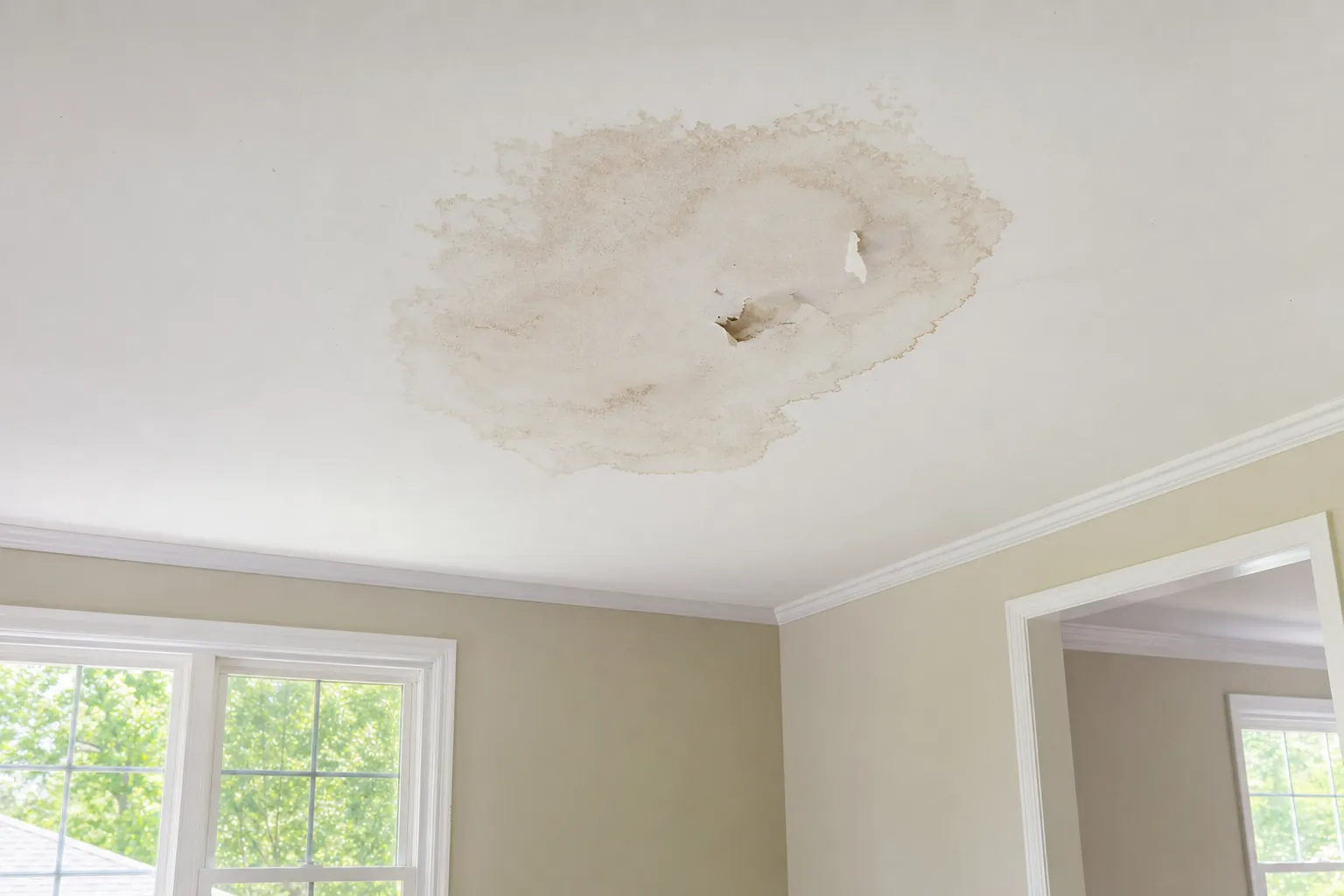
A stained ceiling is not automatically a collapsed ceiling, but the material's condition matters. Look from a safe distance. A dry, flat, firm surface with a small old stain is very different from drywall that looks swollen, soft, bubbled, cracked, or pulled down at a seam. The latter may contain trapped water or may no longer be structurally sound enough for a simple repair.
- Small, dry, stable stain: The source has been stopped, the ceiling is firm, and there is no continuing moisture. It may be possible to repair the finish after a proper drying check.
- Peeling paint or bubbling texture: Moisture likely affected more than the top coat. The ceiling still needs to be dry and stable before scraping, patching, priming, or repainting.
- Sagging, soft, cracked, or dripping drywall: Keep the area clear. This is not a paint project, and it may require removal and replacement after the space above is assessed.
- Damage near electrical equipment: Treat the condition as urgent. Do not touch the fixture, switch, or wet ceiling until the electrical risk has been evaluated.
For a general ceiling assessment, see Water Stain on Ceiling: What It Means and What to Do. It helps distinguish a dry old mark from signs that a leak or moisture problem is still active.
6. Do not poke, drill, or paint your way past trapped moisture
It is tempting to release a ceiling bulge, drill a small hole, or paint over a discolored spot. Those actions can make the situation worse. A wet ceiling can fail unexpectedly, and there may be electrical wiring, pipes, insulation, or contaminated water above it. Opening the wrong area can spread the mess or expose you to a risk you did not see from below.
Painting over a stain is another common shortcut. It may cover the color for a while, but it does not prove the source is repaired or the material is dry. If water remains in the cavity, the stain can return, the drywall can weaken, and a musty odor can develop later. Finish work belongs at the end of the process, not the beginning.
Use a qualified assessment when the ceiling is visibly damaged, the water source was contaminated, or you cannot tell how far the moisture spread. The site's water-damaged ceiling repair guide explains what a sound repair sequence looks like after the source and drying work are complete.
7. Drying needs to cover more than the visible ceiling
Drying is not the same as waiting for a room to feel less humid. Water can remain in drywall, insulation, wood framing, flooring layers, and nearby walls after the surface looks normal. The U.S. Environmental Protection Agency recommends drying water-damaged areas and items within 24 to 48 hours to help prevent mold growth. It also notes that controlling moisture is the key to preventing indoor mold problems.
Fans and dehumidifiers can be useful after the source is controlled and the ceiling is stable, but they do not prove that a hidden cavity is dry. Opening windows may help only when outdoor air is drier than indoor air. Do not aim a fan at a visibly unstable ceiling, and do not reopen the affected bathroom until the plumbing issue is resolved.
A qualified cleanup professional can check areas that are not obvious from the room below and explain whether drywall, insulation, trim, or other materials need removal. That is particularly useful after water has moved through a ceiling because the visible stain may not show the full footprint.

8. Know which professional solves which part of the problem
Different problems need different expertise. A plumber addresses the fixture, drain, supply line, or blockage that caused the toilet overflow. That work is essential, but it does not automatically inspect or dry the ceiling below. Water cleanup and restoration help may be needed when moisture has spread into building materials or when contaminated water may have reached areas beyond the bathroom.
When you speak with a professional, ask for a clear explanation of the water source, the affected areas, the drying or removal plan, and what could change the scope. You should understand which materials are expected to recover, which may need replacement, and how the work will avoid closing up damp material. The site's how it works overview shows the basic steps from initial assessment through the next repair decision.
Call qualified help promptly when the ceiling is sagging, actively leaking, close to electrical equipment, softened over a large area, or affected by wastewater. The same applies when the leak source is unclear, the problem has happened more than once, or you cannot confirm that the ceiling cavity is dry.
9. Prepare for the insurance conversation without assumptions
Coverage depends on the cause of the overflow and the details of your policy. A homeowner should not assume that every toilet overflow is covered or excluded based on a general rule. The practical move is to preserve the facts: photos, videos, dates, receipts, the plumber's findings, and an itemized explanation of what was damaged.
Ask the insurer what documentation is needed before disposing of damaged belongings or authorizing non-emergency repair work. Keep your notes factual. Describe what happened, where the water traveled, and what was done to limit further damage. That makes the conversation clearer and avoids turning a stressful cleanup into a memory test.
10. A simple next-step checklist
- Keep people out of the room below if the ceiling is wet, sagging, dripping, or near electrical equipment.
- Stop using the toilet and bathroom until the overflow source is controlled.
- Turn off power to the affected room only when the electrical panel is safely accessible.
- Photograph the bathroom, ceiling below, damaged belongings, and the route water appears to have taken.
- Keep contaminated or wet items from being carried through clean parts of the home.
- Contact a plumber for the cause and qualified water cleanup help when water reached the ceiling, walls, or other building materials.
- Wait to patch, prime, or paint until the source is fixed and the affected materials are confirmed dry.
When you need to discuss water that has traveled beyond the bathroom, call 1-877-264-7045. US Water Damage Pros can help you understand the next step for water damage cleanup and repair.
Frequently asked questions
Can a toilet overflow damage the ceiling below?
Yes. Water can travel through flooring, gaps around plumbing, or other openings before reaching the ceiling below. Even when the ceiling only shows a small stain, the space above it may need a closer look for wet drywall, insulation, framing, or wiring.
Is water from a toilet overflow always contaminated?
The answer depends on what overflowed and why. Water that has moved beyond the toilet bowl, especially water from a backup, should be treated carefully. The U.S. Environmental Protection Agency advises using a professional experienced with contaminated-water cleanup when sewage or other contaminated water has damaged a building.
Should I poke a hole in the ceiling after a toilet overflow?
Do not poke, drill, or cut a wet ceiling without understanding the risks. A bulging ceiling can be unstable, and there may be wiring, insulation, or contaminated water above it. Keep people out of the area and arrange qualified help when the ceiling is sagging, actively dripping, or near electrical equipment.
Should I call a plumber or a water cleanup professional?
A plumber addresses the fixture or plumbing failure that caused the overflow. Water cleanup help may be needed when water has spread into the ceiling below, walls, flooring, insulation, or other materials. In many cases, both roles are useful because stopping the source does not automatically dry or repair the affected building materials.
Related posts
How to Fix a Water-Damaged Ceiling Safely
A practical homeowner guide to stopping the source, drying the area, and knowing when a ceiling repair is not a do-it-yourself job.
Read the guide →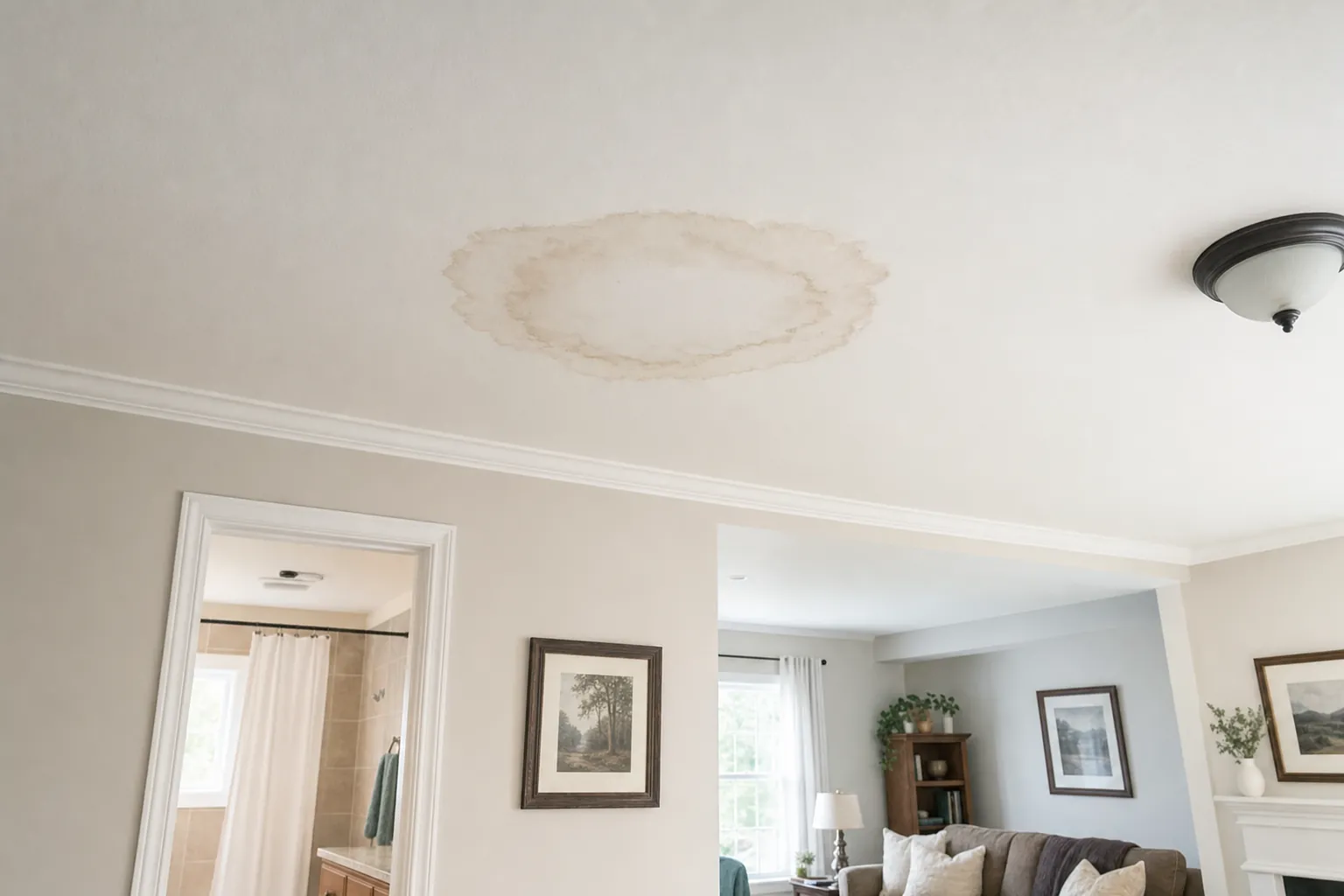
Water Stain on Ceiling: What It Means and What to Do
Learn what a ceiling water stain can signal, how to judge the urgency, and the safer next steps before repairing or repainting.
Read the guide →