Water Stain on Ceiling: What It Means and What to Do
Learn what a ceiling water stain can signal, how to judge the urgency, and the safer next steps before repairing or repainting.
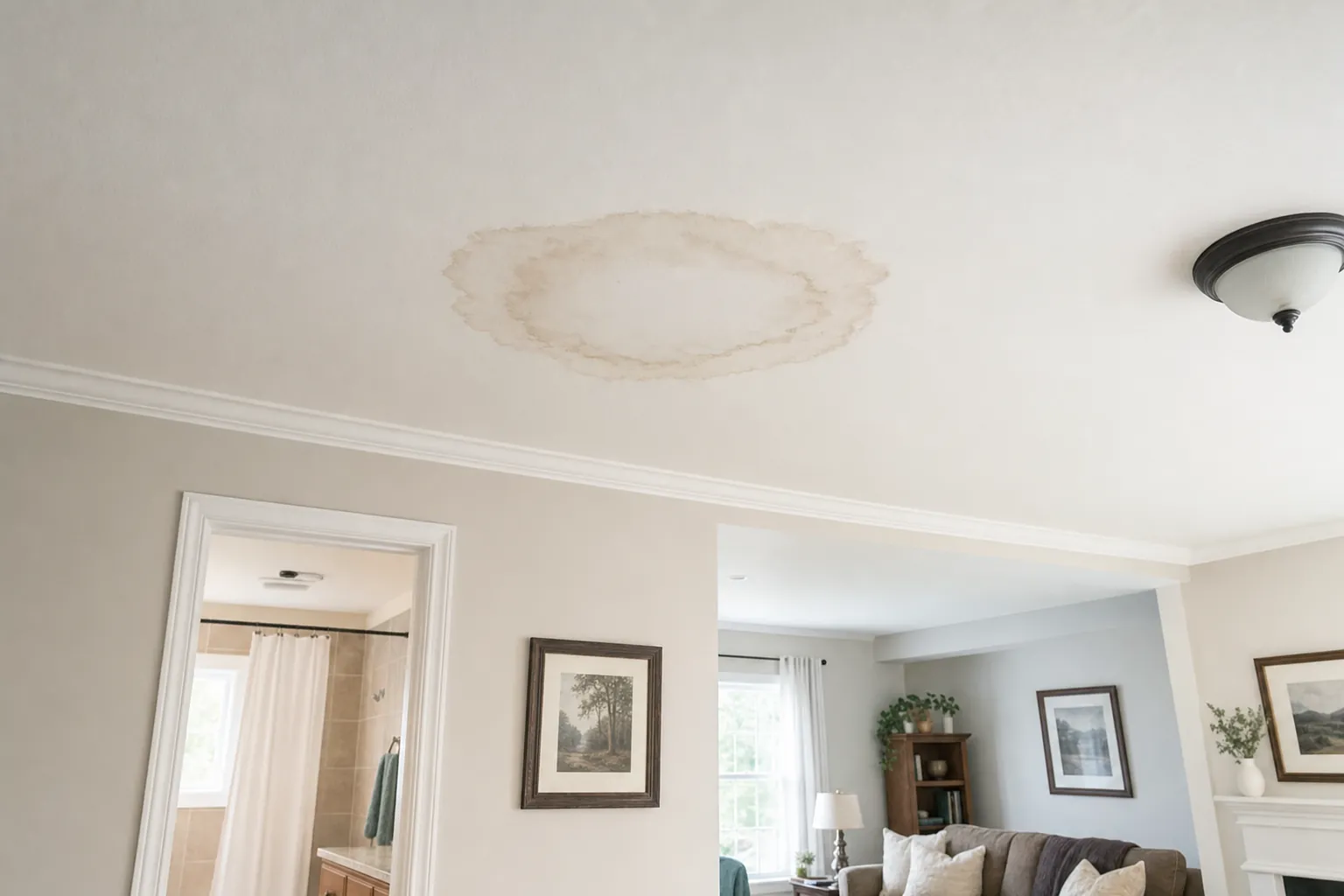
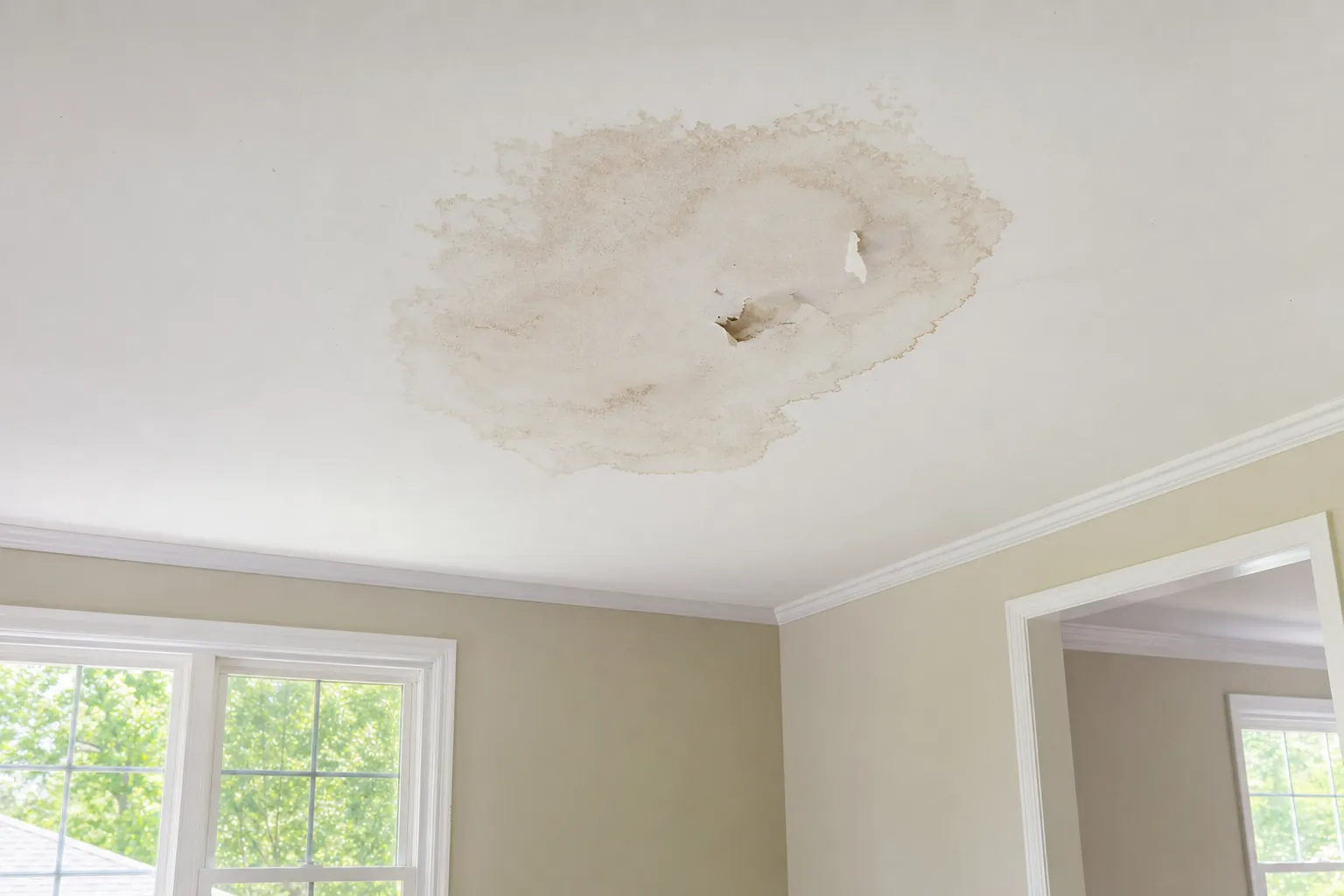
A water stain on a ceiling is not a decorating problem until you know why it appeared. The visible ring may be the last part of a leak that has already stopped, or it may be the first clue that water is still moving above the drywall. The practical order is to make the area safe, look for a pattern, stop the source, document the condition, dry the affected materials, and only then decide whether the ceiling needs repair or paint.
What a Ceiling Water Stain Can Mean
Most ceiling stains form when water moves through or across drywall and then dries. As it evaporates, it can leave a brown, yellow, or gray ring from minerals, dust, rust, wood tannins, or other material picked up along the way. That means the color is a clue that water was present, not a diagnosis of where it came from.
Start with the room above and the timing. A stain below a bathroom that changes after showers, baths, toilet use, or a washing-machine cycle points toward plumbing or a fixture. A top-floor stain that appears after wind-driven rain may point to the roof, flashing, a vent, or a window detail. An attic HVAC unit, condensate line, or appliance can also create a ceiling stain without a storm or a plumbing event.
Do not assume the stain sits directly below the source. Water can travel along framing, pipes, wiring, or the back of drywall before it reaches a low point. The site’s guide to common water-damage signs can help you look beyond the color change for peeling paint, soft materials, musty odor, or swelling.
First, Rule Out an Immediate Safety Problem
Keep clear of a ceiling that is bulging, sagging, cracking, or actively dripping. Wet drywall can lose strength, and a swollen area can hold a surprising amount of water. Move people and pets away, protect belongings only when it is safe, and place a container under a steady drip without touching or pressing on the ceiling.
Take extra care if water is near a light fixture, ceiling fan, outlet, or electrical appliance. The Federal Emergency Management Agency's flood guidance warns against touching electrical equipment while standing in water. If you can safely reach the breaker panel without going into a wet area, turn off power to the affected room. Do not touch the fixture, switch, or ceiling to test whether it is safe.
Call emergency services for an immediate hazard. For a plumbing failure, contact a qualified plumber to stop the water. For a roof leak, avoid climbing onto a wet roof or entering an unsafe attic. The early decision is about preventing more damage and avoiding injury, not opening up drywall.
How to Tell Whether the Stain May Be Active
A dry, flat stain that has not changed for a long time is different from one that is spreading, darkening, or soft to the touch. Take a clear photo from the same spot, then compare it after the next rain, shower, appliance cycle, or other likely trigger. Put a small piece of painter's tape near the edge, not on loose paint, to make growth easier to spot.
Look for a pattern rather than relying on a single glance. A stain that deepens after rain suggests an exterior water-entry problem. A stain that changes when an upstairs fixture runs may suggest a supply, drain, or seal problem. Condensation can be more likely near a bathroom or HVAC component, especially when ventilation is poor. Repeating stains are a reason to investigate the source even when the ceiling feels dry between events.
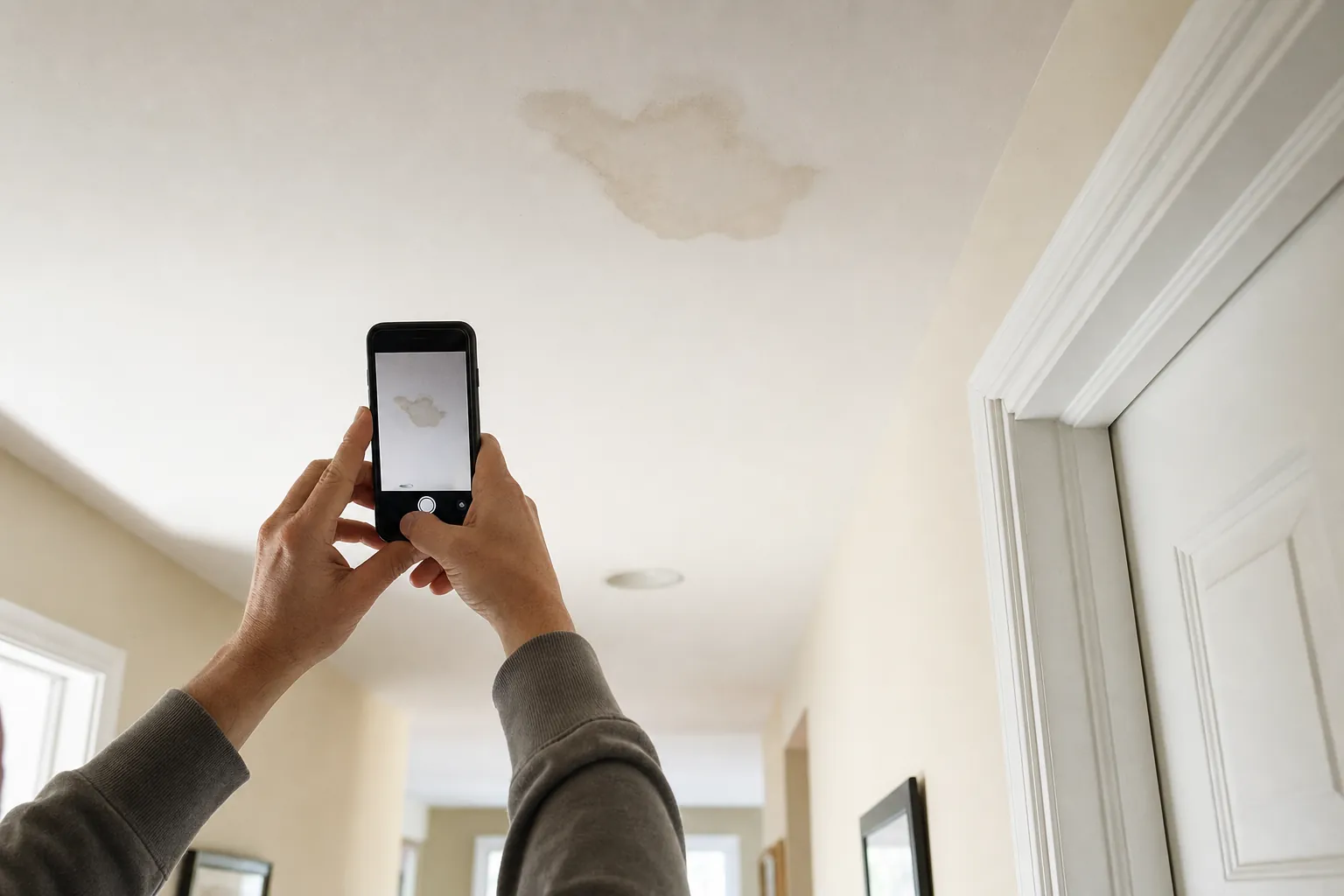
Photos, dates, and a short note about what was happening are useful for a plumber, roofer, insurer, or restoration professional. They also prevent a common mistake: repainting an area that only looked stable because the next trigger had not occurred yet.
Common Sources to Check Safely
Check only what you can see from a safe, dry position. You are looking for clues, not trying to perform a risky inspection.
- Bathroom or kitchen above: Ask whether the stain changes after using a shower, tub, toilet, sink, dishwasher, or refrigerator line. Look for visible drips beneath accessible fixtures.
- Roof or exterior wall: Note whether the stain appeared after rain, then inspect the exterior from the ground for obvious missing shingles, blocked gutters, damaged flashing, or a problem around a vent or skylight.
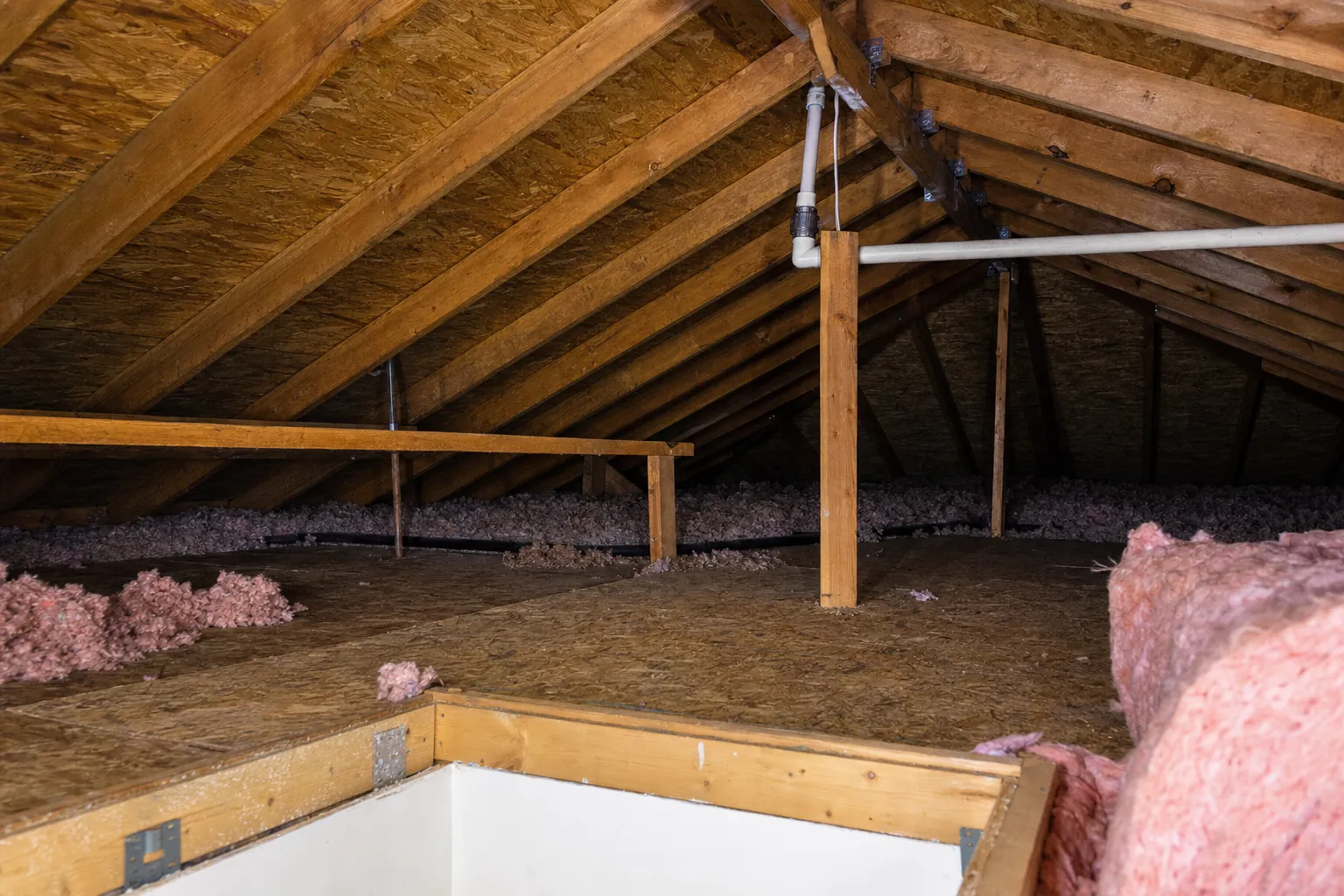
- Attic or HVAC equipment: A safe visual check may reveal a damp condensate pan, drain line, insulation, or roof decking. Do not step on exposed ceiling drywall or navigate an attic without safe access and adequate lighting.
- Room humidity: Persistent condensation in a poorly ventilated bathroom can contribute to moisture problems, but it should not be used to dismiss a new or growing stain without checking other causes.
If rain is the likely trigger, the site's roof-leak guidance explains the documentation and provider questions that matter before a repair begins. If you cannot connect the stain to a safe, obvious source, avoid cutting into the ceiling just to look around.
Document the Damage Before You Clean or Repair
Photograph the stain, the room, any affected belongings, and the apparent source before moving, cleaning, or discarding anything. Capture a wider room shot and a close-up, then write down when you first noticed the stain and whether it changed after rain or fixture use. Keep receipts for reasonable emergency steps such as a plumber's visit or temporary water control.
That record gives you a better starting point for an insurance conversation. Coverage depends on the cause of the loss and the policy language, so no one should promise coverage based only on the color of a ceiling stain. The site's water-damage insurance claim guide explains the facts and photos worth gathering before you contact an insurer.
What Not to Do With a New Ceiling Stain
A small stain makes it tempting to take the fastest cosmetic step. That is how a manageable leak becomes an expensive hidden-moisture problem. Do not paint over a new stain, cover it with a decorative panel, or apply caulk around a nearby fixture before you know where the water came from. Those actions can make it harder to see whether the condition is changing.
Do not press on a soft area or puncture a bulge to release water. An overloaded ceiling can fail suddenly, and the space above it may contain wiring, insulation, contaminated water, or a pipe that is still leaking. A bucket under a drip can protect the floor temporarily, but it is not a reason to stand beneath a swollen ceiling or begin cutting drywall.
Avoid treating a household fan as proof that the job is finished. Moving air may dry the surface while moisture remains above the ceiling. It can also spread contamination if the water source is sewage or another unsanitary source. The safer question is not “Does the room feel dry?” but “Was the source fixed, and are the affected materials actually dry and sound?”
Finally, do not dismiss a musty odor just because the stain is old. Odor, bubbling paint, a recurring ring, or a cool damp feel can all point to conditions that need a closer look. Cosmetic repair makes sense only after the moisture issue has been resolved.
Drying Matters Before Cosmetic Repair
Once the source is fixed and the ceiling is stable, drying the affected area is the next priority. A room can feel normal while moisture remains in drywall, insulation, framing, or an adjacent wall. The U.S. Environmental Protection Agency says that drying wet or damp materials within 24 to 48 hours after a leak or spill helps prevent mold growth in most cases.
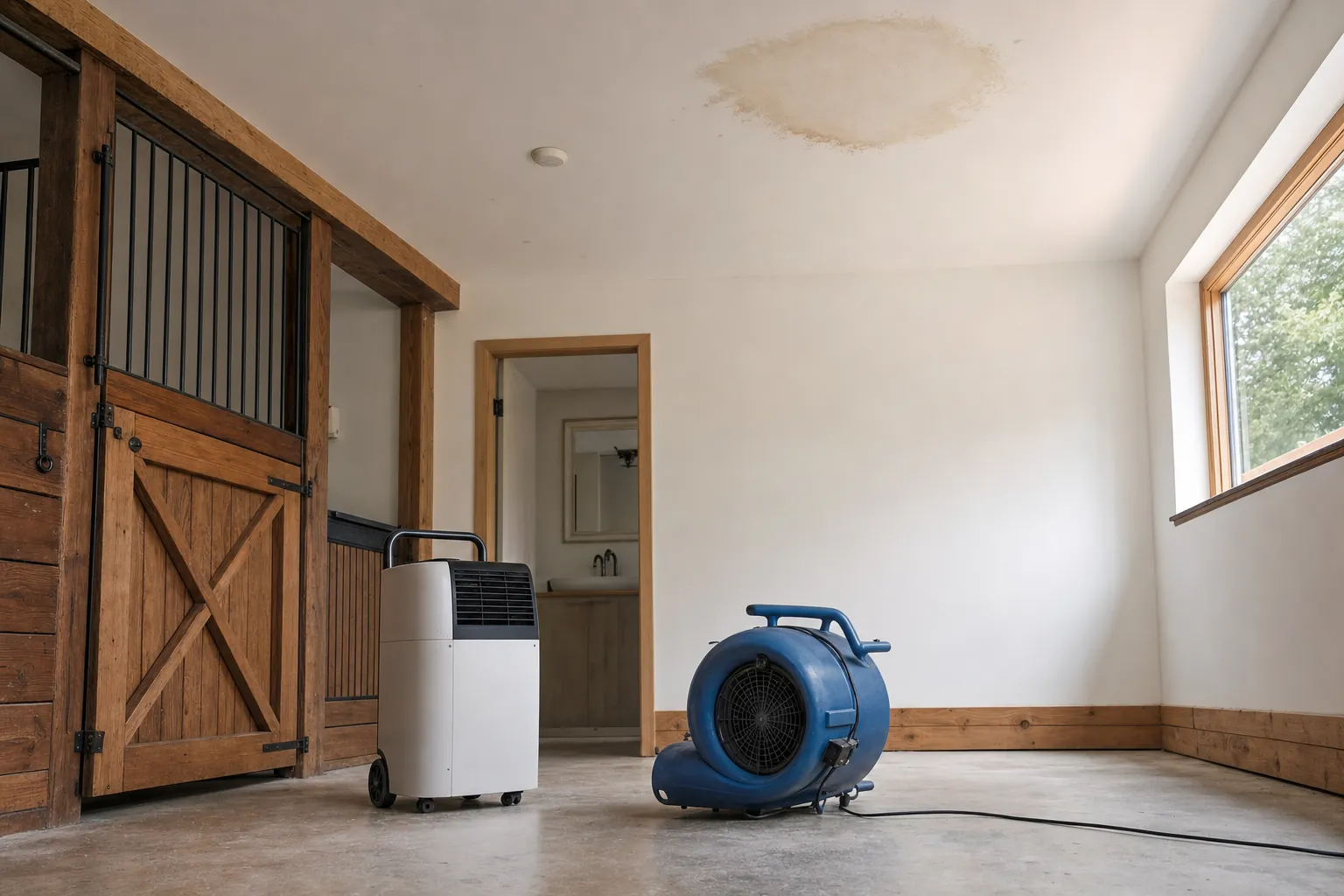
The EPA's mold and moisture guide also makes the key point plainly: moisture control is the basis of mold control. Fans and dehumidifiers may help after the water source is stopped and the area is safe, but they do not prove the cavity above the ceiling is dry. Do not aim equipment at an unstable ceiling, and do not use fans before you understand whether the water may be contaminated.
Where drywall is swollen, seams are damaged, insulation is wet, or the source involved sewage or floodwater, the job may require more than surface drying. The EPA's water-damage guidance notes that drywall may be dried in place only when there is no obvious swelling and the seams remain intact. When those conditions are not met, removal and replacement may be the safer route.
When It Is Safe to Repaint a Ceiling Stain
Painting comes last. Before applying primer or ceiling paint, confirm that the source was repaired, the area has stayed dry through the likely trigger, and the drywall remains firm and flat. Scrape loose paint, repair damaged finish material, and replace drywall that has become soft, bowed, cracked, or detached from its fasteners.
For a small, dry, stable stain with sound drywall, clean the surface and use a stain-blocking primer before a finish coat. Ordinary ceiling paint can allow brown or yellow discoloration to bleed back through. A returning stain after repainting is not a paint failure, it is a reason to look again for moisture or an unresolved source.
For a detailed repair sequence after the area is safe and dry, read How to Fix a Water-Damaged Ceiling Safely. That guide covers repair decisions without treating an active leak as a do-it-yourself paint project.
A Simple Next-Step Checklist
Use this sequence when you notice a water stain on the ceiling. It keeps the decision focused on safety and the source instead of the color of the stain.
- Make the area safe: Stay clear of sagging material and anything near electricity. Protect the floor and belongings only when you can do so safely.
- Note the trigger: Ask whether the stain appeared after rain, plumbing use, an appliance cycle, or a period of high humidity.
- Take photos: Record the ceiling, nearby room, and likely source before cleanup or repair changes the evidence.
- Stop the source: Arrange the right help for the likely cause, such as a plumber for a fixture leak or a roofer for rain-related entry.
- Dry and assess: Confirm that affected materials are dry and stable before repairing drywall, texture, primer, or paint.
- Monitor the area: Recheck after the next likely trigger. A returning stain means the source or drying plan needs more attention.
If the situation is urgent or uncertain, use the site's service overview to understand the types of water removal, drying, remediation, and repair work a qualified provider may discuss. Clear answers about the source and scope are more valuable than a rushed promise to make the stain disappear.
When to Bring in Qualified Help
Call for qualified help when water is active, the ceiling is sagging, the stain is near electrical equipment, the source is unclear, the same spot keeps returning, or the damage involves sewage, flooding, or a large area. A plumber can address a plumbing source, a roofer can investigate a roof entry point, and a water-damage professional can assess affected materials and drying needs after the source is under control.
When you compare options, ask what they believe caused the water, how they will confirm the area is dry, which materials need replacement, and what could change the work scope. US Water Damage Pros offers a plain-language process for evaluating the next step and a way to call 1-877-264-7045 for water-damage help.
Frequently asked questions
Is a water stain on a ceiling always an active leak?
No. A stain can be left behind by an older leak that has already been repaired and dried. It still deserves attention because there is no reliable way to tell from color alone whether moisture remains. Compare photos over time and investigate any stain that grows, feels soft, or changes after rain or normal use of a room above.
Can I paint over a water stain on my ceiling?
Only after the source has been fixed and the ceiling is confirmed dry and sound. Paint can hide the color temporarily, but it does not repair damp drywall, damaged insulation, or an active leak. A stain-blocking primer is a finish step, not the first response.
What does a brown water stain on a ceiling usually mean?
A brown or yellow ring usually means water carried minerals, dirt, rust, or material from above the ceiling as it dried. The color does not identify the source by itself. Roof leaks, plumbing leaks, HVAC condensation, bathroom moisture, and appliance leaks can all leave similar marks.
When should I call for help about a ceiling water stain?
Call for qualified help when the ceiling is sagging, actively dripping, close to electrical equipment, repeatedly wet, affected by sewage or floodwater, or when you cannot identify and stop the source safely. A professional assessment is also sensible when hidden moisture is likely or the stain keeps returning.
Related posts
How to Fix a Water-Damaged Ceiling Safely
A practical homeowner guide to stopping the source, drying the area, and knowing when a ceiling repair is not a do-it-yourself job.
Read the guide →