Water Damage Smell: What It Means and What to Do
A persistent musty odor can point to hidden moisture. Learn how to investigate safely, what not to do, and when drying or qualified help is needed.
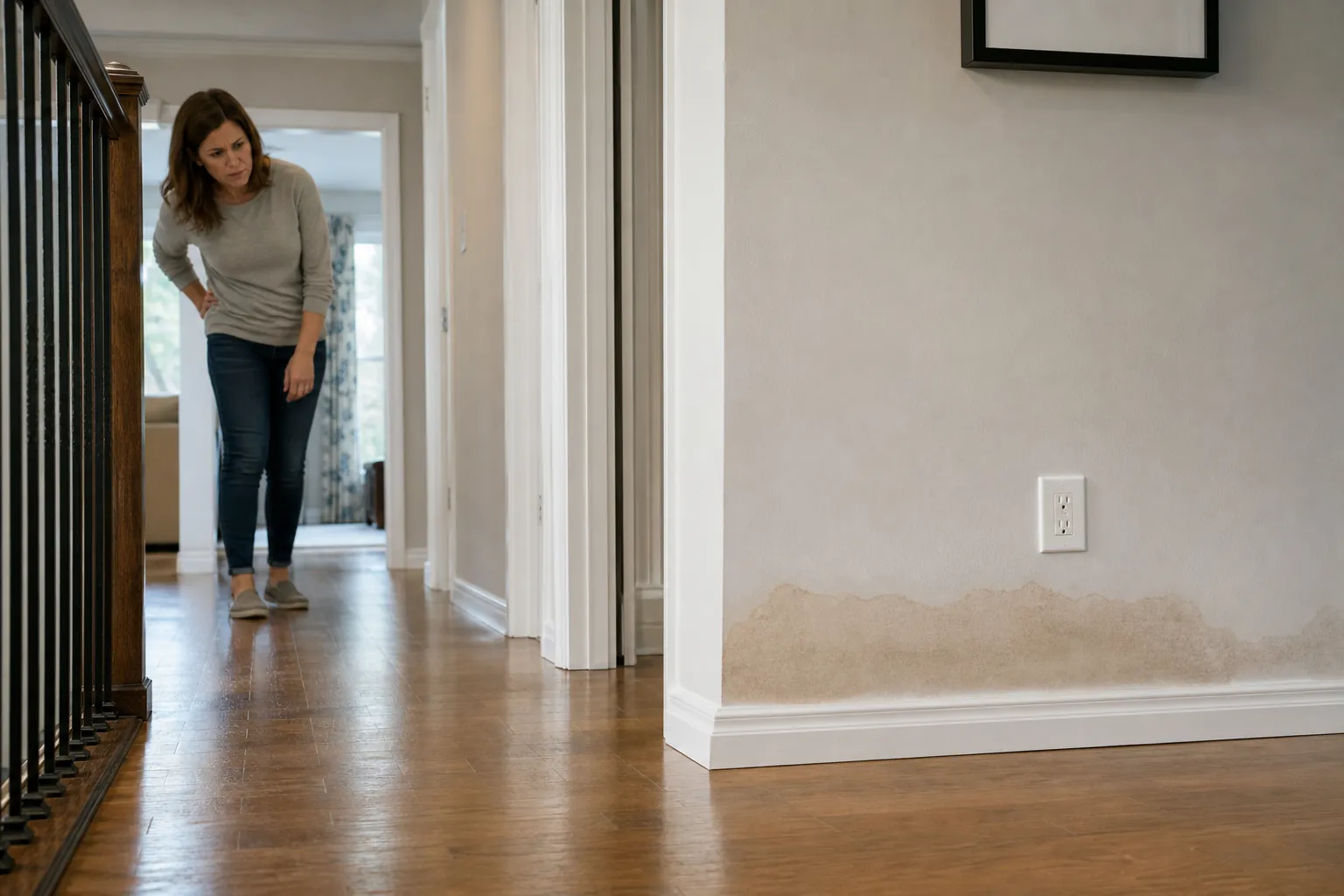
A musty or stale smell after water damage is easy to dismiss when there is no puddle in sight. That is exactly why it deserves a practical check. Odor can linger in damp drywall, carpet padding, wood, insulation, or dust, and it can also signal that a leak is still feeding moisture somewhere out of view. The smell does not identify the cause on its own and it does not automatically mean mold. It does mean that covering it with fragrance or paint is the wrong finish line. Start by making the area safe, looking for a pattern, checking likely sources you can reach safely, and confirming that the water problem is truly resolved.
What a Water-Damage Smell Can Mean
People describe a water-damage smell as musty, damp, earthy, stale, or like a closed-up basement. Those descriptions are useful because they point toward a moisture problem, but they are not a diagnosis. Damp building materials and organic dust can produce an odor before you see a stain, and mold can grow where moisture is available. The Centers for Disease Control and Prevention explains that mold can grow in places with water or moisture problems, including around leaks in roofs, windows, or pipes.
At the same time, odor has other possible causes. A dry trap in an infrequently used drain, a pet accident, cooking residue, dirty HVAC equipment, or ordinary basement humidity can also create an unpleasant smell. The goal is not to label every odor as a major water-loss event. The goal is to notice whether the smell is tied to a room, a weather event, plumbing use, an appliance, or a visible change in the home.
That context turns a vague concern into a useful investigation. If the smell began after a pipe leak, washing-machine overflow, roof leak, or wet carpet, treat it as part of the water-damage follow-up. If it appears only after a shower or dishwasher cycle, the source may be more local. The site's guide to common water-damage signs can help you compare odor with other clues such as discoloration, bubbling paint, swelling, or a soft surface.
Start With Safety and an Obvious Source
Do not search through a wet, dark, or damaged area just to locate an odor. Water around electrical outlets, appliances, breaker panels, or wiring changes the risk immediately. Keep clear of a sagging ceiling, a soft floor, visible standing water, or a room affected by sewage or floodwater. If there is an immediate safety concern, contact emergency services.
Then ask the simple questions first. Did the smell start after rain? Does it become stronger after someone showers, flushes, runs the dishwasher, or uses a washing machine? Is it concentrated near a sink, water heater, air-conditioning equipment, basement wall, attic access, or a ceiling stain? A pattern can suggest where water is entering without encouraging you to open walls or climb into an unsafe attic.
If water is still active, stop the source only when you can do so safely. A qualified plumber may be the right first call for a supply-line or fixture leak. A roofer may be better for water that follows rain. The site's emergency water cleanup guide explains the first decisions after active water is discovered, including why documentation and safe drying matter before cosmetic repairs.
Look for Clues Without Taking the House Apart
Use sight, touch, and timing from a safe, dry position. You are looking for evidence that supports or rules out a moisture problem, not trying to perform demolition. Check lower walls, baseboards, ceilings, floor edges, cabinets, and areas around plumbing fixtures for a stain, lifted paint, warped material, cool dampness, or a surface that feels softer than the surrounding area.
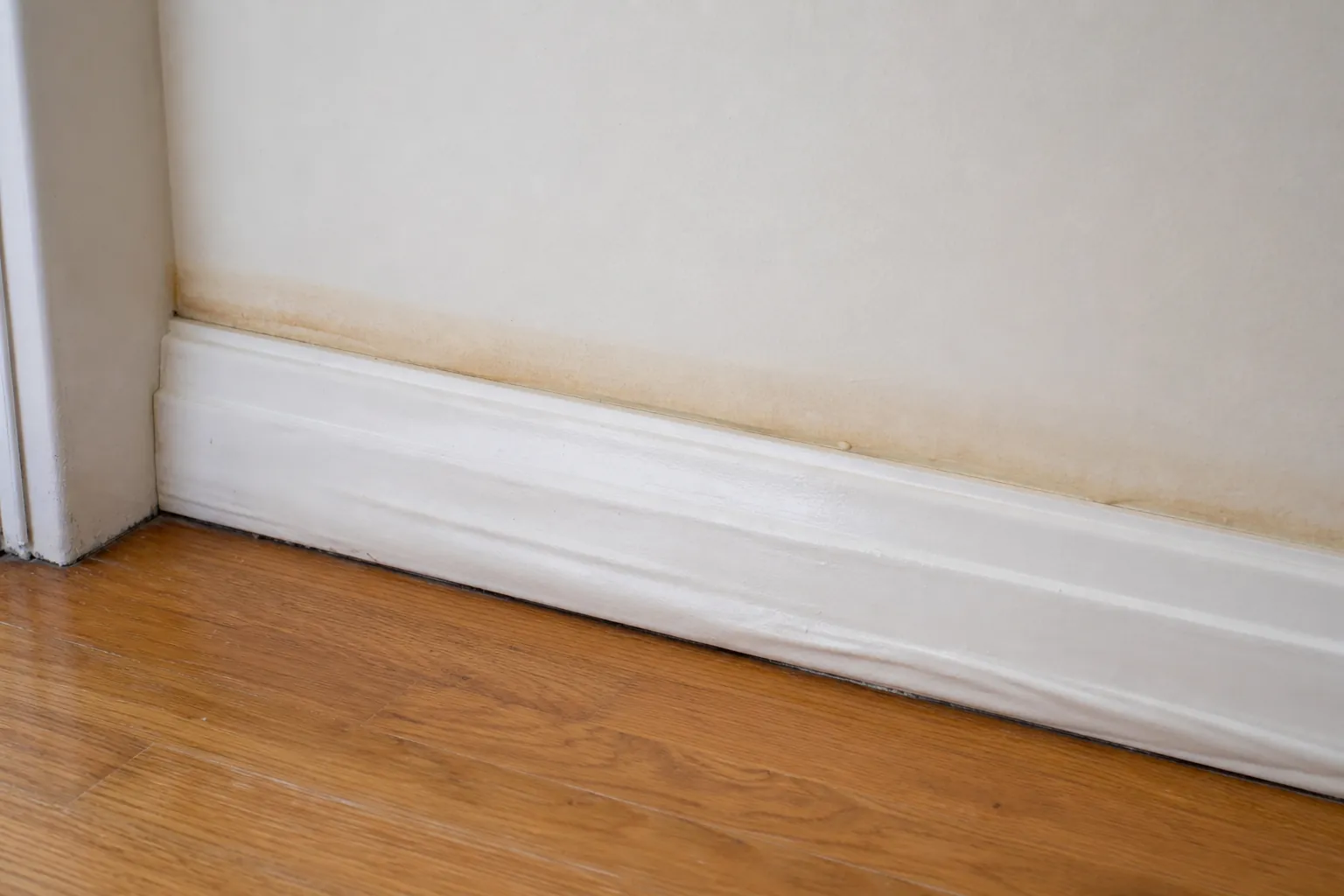
Pay attention to the edges. Water often travels behind a wall or under a floor before it becomes visible, so the strongest clue may be a bubbled baseboard, a dark line at carpet tack strips, a loose floor transition, or a stain on the ceiling below a bathroom. A water stain does not always sit directly below the source. The site’s guide to common water-damage signs can help you compare a musty smell with visible clues such as discoloration, bubbling paint, swelling, or a soft surface.
Take photos before cleaning or moving anything. Photograph a wider view of the room and close-ups of the affected area, then note the date and any likely trigger. A brief record can help a plumber, roofer, insurer, or restoration provider understand what changed and keeps you from relying on memory after the smell fades for a few days. If an insurance conversation may follow, the site's water-damage claim guide explains the records worth keeping.
Check Common Sources Safely
Focus on places you can inspect without reaching into a wet area, disassembling equipment, or climbing. A small flashlight can help you look under a sink, around a water heater, behind an accessible appliance, or near an HVAC condensate line. If you find a fresh drip, wet cabinet bottom, rust, or an active leak, stop using the fixture when that is safe and arrange the appropriate repair.
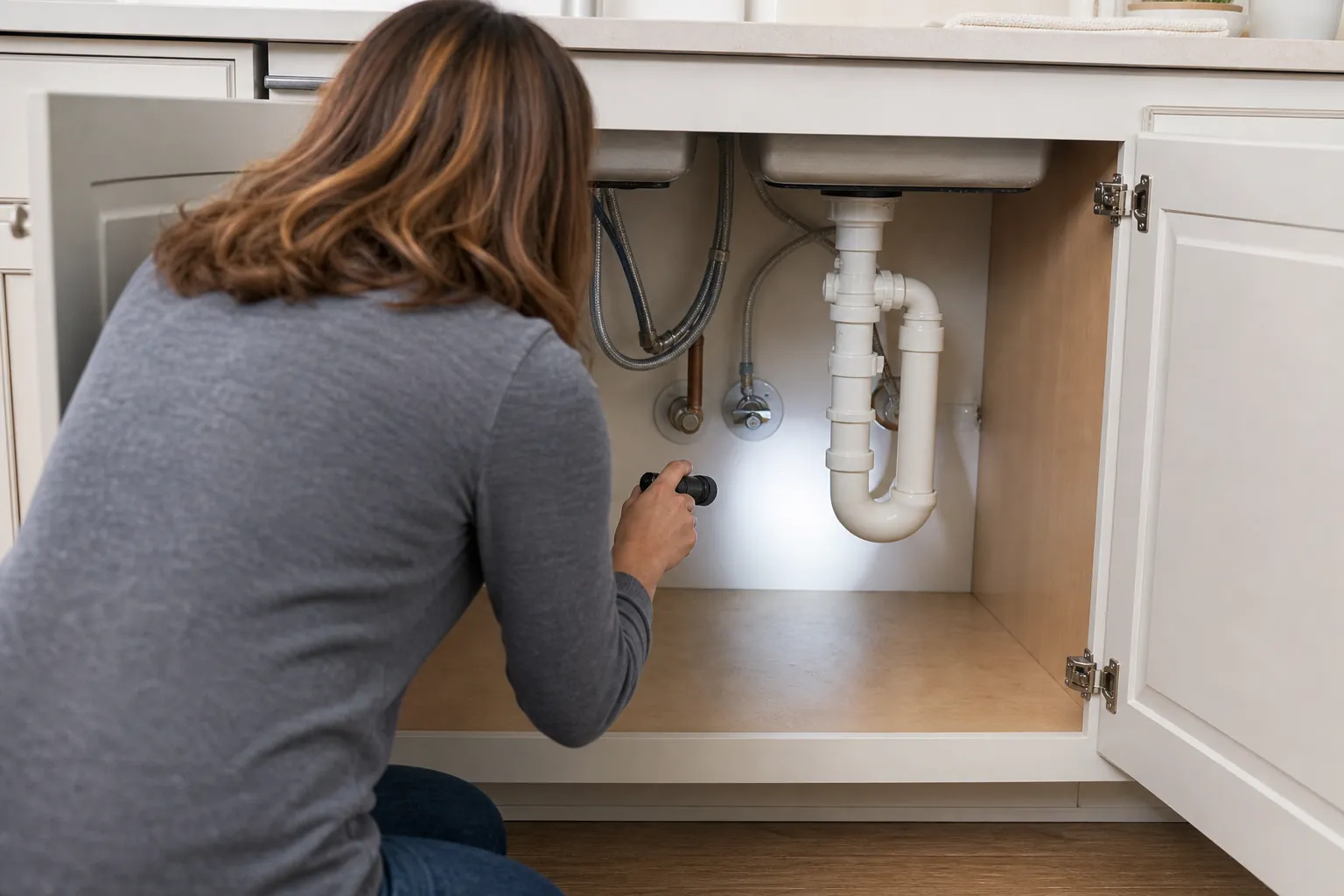
- Under sinks and around toilets: Check for damp cabinet bottoms, drips at shutoff valves, a loose supply connection, or flooring that feels swollen.
- Appliances: Look for a wet floor behind a refrigerator, dishwasher, washing machine, or water heater. Avoid moving a heavy appliance if the floor may be weak or the area is wet.
- Bathrooms: Notice whether the odor follows shower use, a bath, or a toilet flush. Caulk or grout problems can matter, but do not assume they explain a recurring ceiling stain or soft flooring.
- Attics, roofs, and exterior walls: If the smell follows rain, inspect from the ground for roof damage, blocked gutters, or a problem around a vent. Do not climb onto a wet roof or enter an attic without safe access and proper footing.
- Basements and crawl-adjacent spaces: Look for damp foundation walls, condensation, wet carpet edges, or a sump issue. A basement odor that is stronger after rain may need a closer moisture and drainage assessment.
Some sources are not visible from the room. A slow pipe leak behind drywall, wet insulation, or moisture under flooring may require a qualified assessment. The site's attic water-damage guide and roof-leak guidance offer more context when the timing points to those parts of the home.
Why Covering the Smell Is Not a Fix
Fragrance, scented candles, carpet powder, and paint can make a room more pleasant for a few hours. They cannot tell you whether the source is fixed, whether a material is dry inside, or whether contaminated water reached porous material. A returning smell after the room has been closed up, after rain, or after normal plumbing use is more useful information than a temporarily masked odor.
Be cautious with cleaners too. Bleach, strong fragrance, and heavy spray products can irritate the eyes and lungs, mix poorly with other cleaning products, or make it harder to notice that moisture remains. They are not a substitute for removing standing water, fixing a leak, drying materials, or replacing materials that cannot be cleaned and dried appropriately.
The same principle applies to a small stain or bubbling paint. A fresh coat may make the surface look better, but it can hide the clue you need to see whether moisture returns. If the concern is a ceiling, use the site’s water-damaged ceiling repair guide only after the cause and drying plan are clear.
Drying Comes Before Odor Control
Once the source is stopped and the area is safe, drying is the next job. The U.S. Environmental Protection Agency advises drying water-damaged areas and items within 24 to 48 hours to help prevent mold growth in most situations. Its guide to mold and moisture in the home is direct about the priority: moisture control is the basis of mold control.
Surface dryness is not proof that the work is complete. Carpet padding, drywall cavities, insulation, wood framing, and underlayment can hold moisture after the top layer feels normal. A dehumidifier and controlled airflow may help with a stable, clean-water situation after the source is fixed, but they do not make an active leak safe or verify hidden materials are dry.
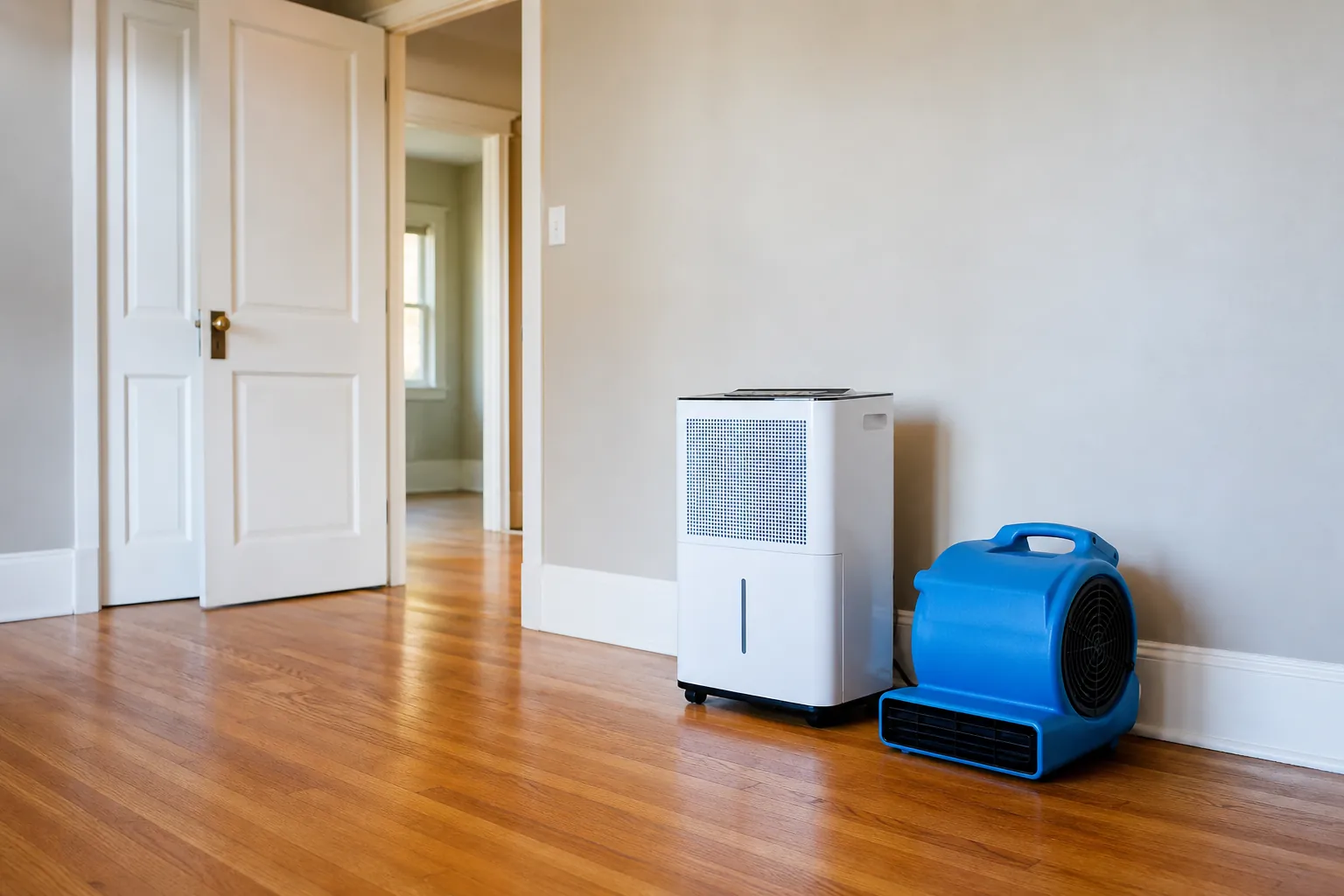
Do not aim a fan at a ceiling that is sagging, use ordinary household drying methods for sewage or floodwater, or keep relying on a machine while the smell keeps returning. Those are signals to reassess the source and scope. The site's water-extraction overview explains why removing visible water and drying building materials are separate parts of recovery.
How to Tell Whether the Smell Is Actually Resolved
Give the room a sensible recheck after the likely trigger. If the issue began after rain, notice whether the odor returns during the next wet weather. If it followed a plumbing leak, inspect the same accessible areas after normal use of the fixture. If a spill soaked carpet or furniture, check whether the odor is stronger after doors and windows have been closed for several hours.
Look for change, not perfection. A room may retain a faint stale smell while clean, dry materials air out, but a smell that becomes stronger, returns after a predictable event, or is joined by new staining, a soft surface, peeling paint, or dampness deserves another look. Taking a photo from the same angle and keeping a simple note about rain or fixture use gives you a clearer comparison than trying to judge the whole situation from memory.
Do not repaint, recarpet, or seal an area just because it has stopped smelling for a day. Confirm that the source was fixed and that affected materials are dry and stable first. That pause can prevent a cosmetic project from trapping a moisture problem behind new finishes.
When a Water-Damage Smell Needs Qualified Help
Bring in qualified help when the smell follows an active leak, floodwater, sewage, visible mold, a soft floor, sagging drywall, a recurring ceiling stain, or an area you cannot inspect safely. It is also reasonable to ask for help when the odor returns after you have repaired an obvious source and dried the room. A moisture assessment can be more useful than guessing which material is holding the smell. The site's mold-remediation guide explains why correcting the moisture source belongs in that conversation.
Ask clear questions before authorizing work: What is the likely moisture source? Which materials are affected? How will dryness be checked? Which materials can stay, and which need removal or replacement? What could change the scope or cost? A reliable answer should explain the proposed work in plain language rather than treating odor alone as a reason for a large project.
US Water Damage Pros helps homeowners understand the service categories they may hear about after a water event, including extraction, structural drying, remediation, and repair. Review the service overview, or call 1-877-264-7045 to discuss the next decision when the situation is urgent or unclear.
A Simple Checklist for a Musty Smell After Water Damage
Use this sequence to keep the response focused on the actual problem rather than the odor alone.
- Make the area safe: Stay clear of water near electricity, standing water, soft floors, or sagging ceilings.
- Identify the timing: Note whether the smell started after rain, a leak, plumbing use, an appliance cycle, or a spill.
- Look for supporting clues: Check accessible areas for staining, bubbling paint, swollen trim, wet carpet edges, or damp cabinet bottoms.
- Photograph what you find: Take wide and close-up photos before cleaning, painting, or moving damaged materials.
- Stop the source: Arrange the right repair for the likely cause, such as plumbing or roof work, without taking unsafe shortcuts.
- Dry and reassess: Confirm materials are dry and stable before treating odor, painting, or replacing finishes.
- Escalate when needed: Get qualified help for recurring odor, hidden moisture, contamination, or damage that cannot be safely inspected.
Frequently asked questions
What does water damage smell like?
Water damage often has an earthy, stale, or musty smell, especially when moisture has been trapped in drywall, carpet, wood, insulation, or another porous material. The odor alone cannot tell you the exact source or prove mold is present, but a persistent smell is a useful reason to look for moisture and fix the cause.
Will a dehumidifier remove a water-damage smell?
A dehumidifier can reduce humidity and support drying after the water source is stopped, but it does not remove an active leak or repair materials that stayed wet. If the smell returns when the room is closed, after rain, or after plumbing use, the source or affected materials may need closer attention.
Can I use air freshener to get rid of a musty smell after water damage?
Air freshener may cover an odor for a short time, but it does not address moisture, contamination, or damaged materials. Avoid treating fragrance as evidence that the problem is fixed. Investigate the source, dry the affected area properly, and replace materials that cannot be safely cleaned or dried.
When should I call for help about a water-damage smell?
Call for qualified help when the odor follows an active leak, sewage or floodwater, visible mold growth, soft or damaged building materials, a recurring ceiling stain, or an area you cannot inspect safely. Help is also sensible when the smell keeps returning after you have addressed an obvious source.
Related posts
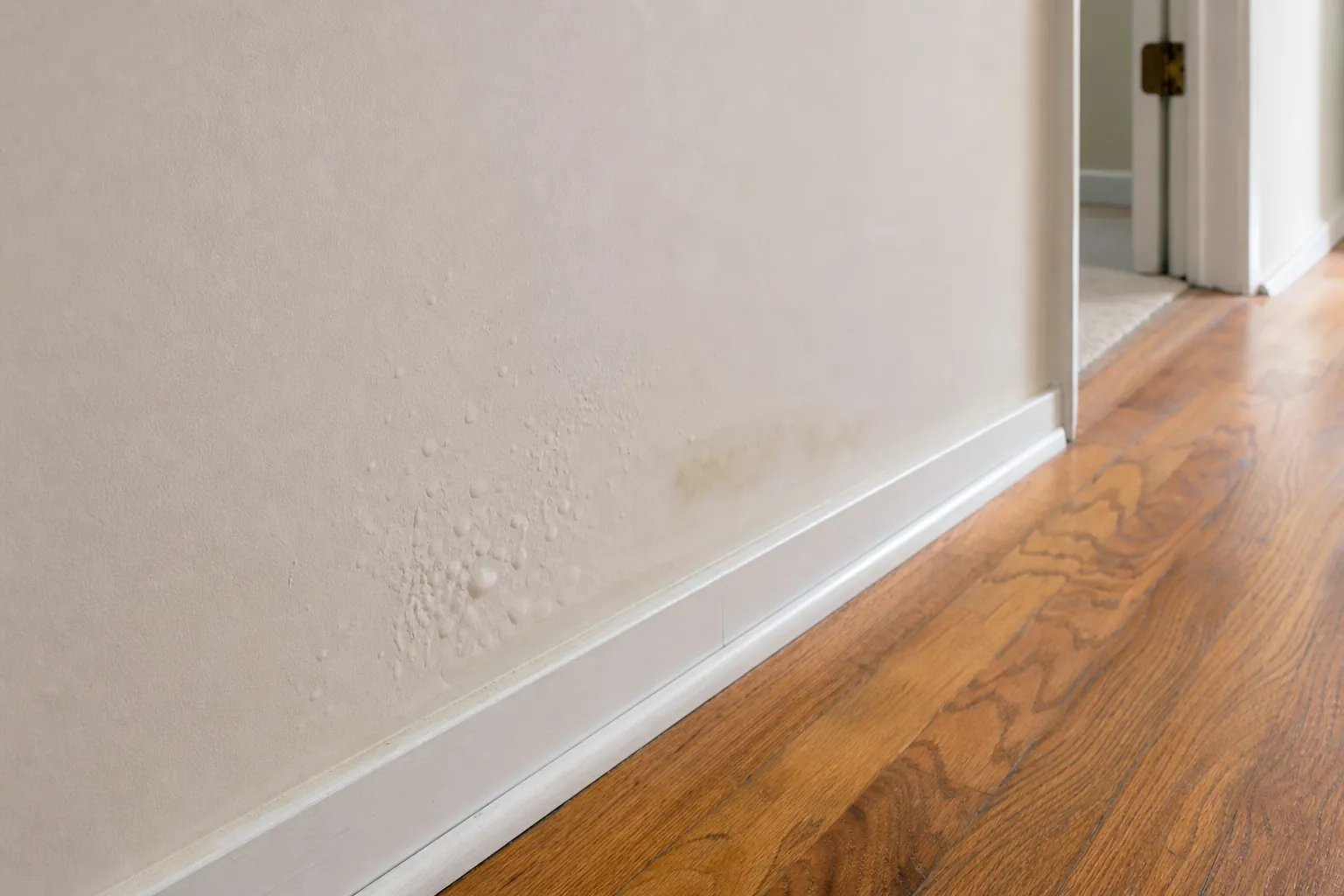
Early Signs of Water Damage in Walls
Learn how to spot wall moisture early, check likely sources safely, and decide when drying or qualified help is the right next step.
Read the guide →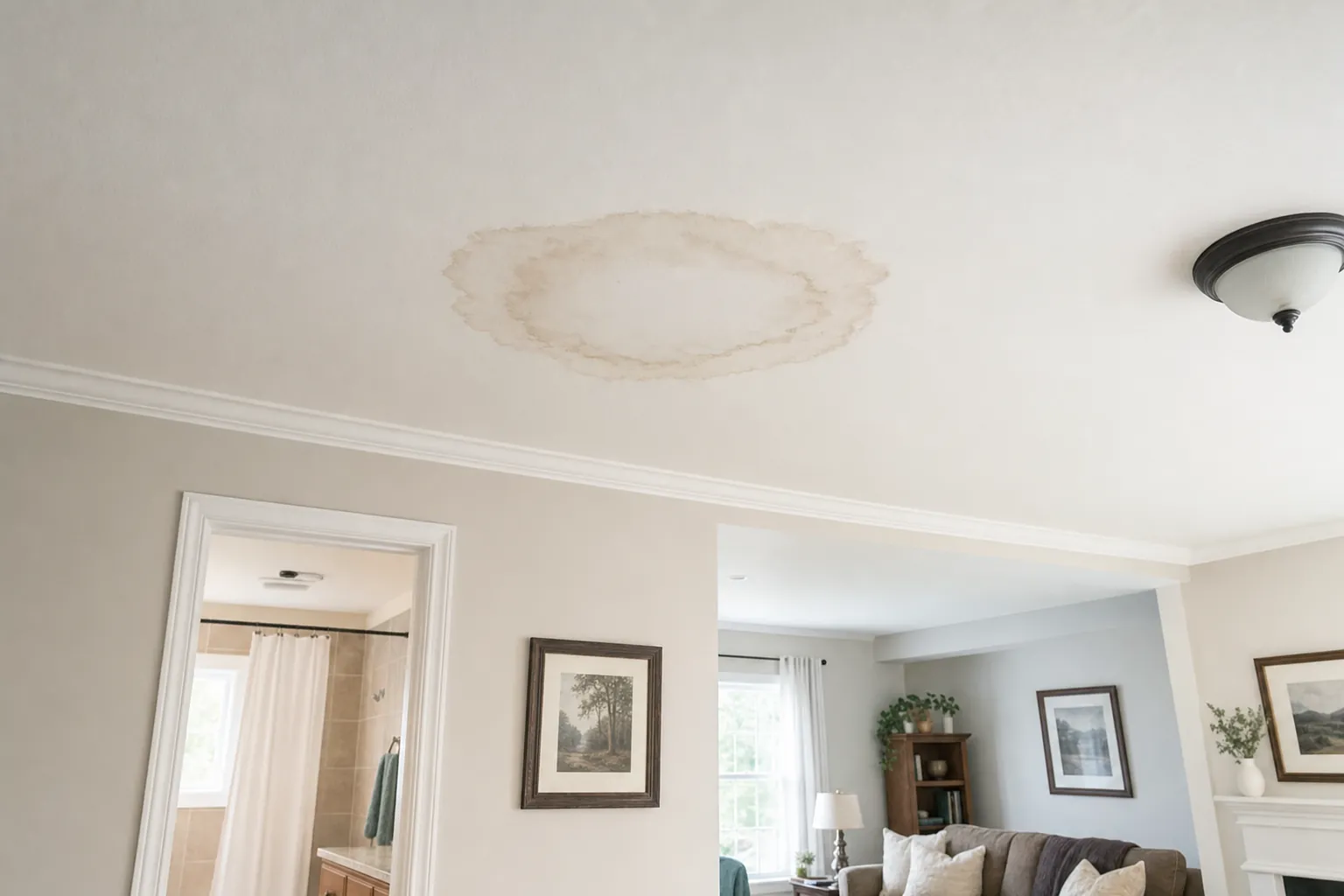
Water Stain on Ceiling: What It Means and What to Do
Learn what a ceiling water stain can signal, how to judge the urgency, and the safer next steps before repairing or repainting.
Read the guide →