Early Signs of Water Damage in Walls
Learn how to spot wall moisture early, check likely sources safely, and decide when drying or qualified help is the right next step.
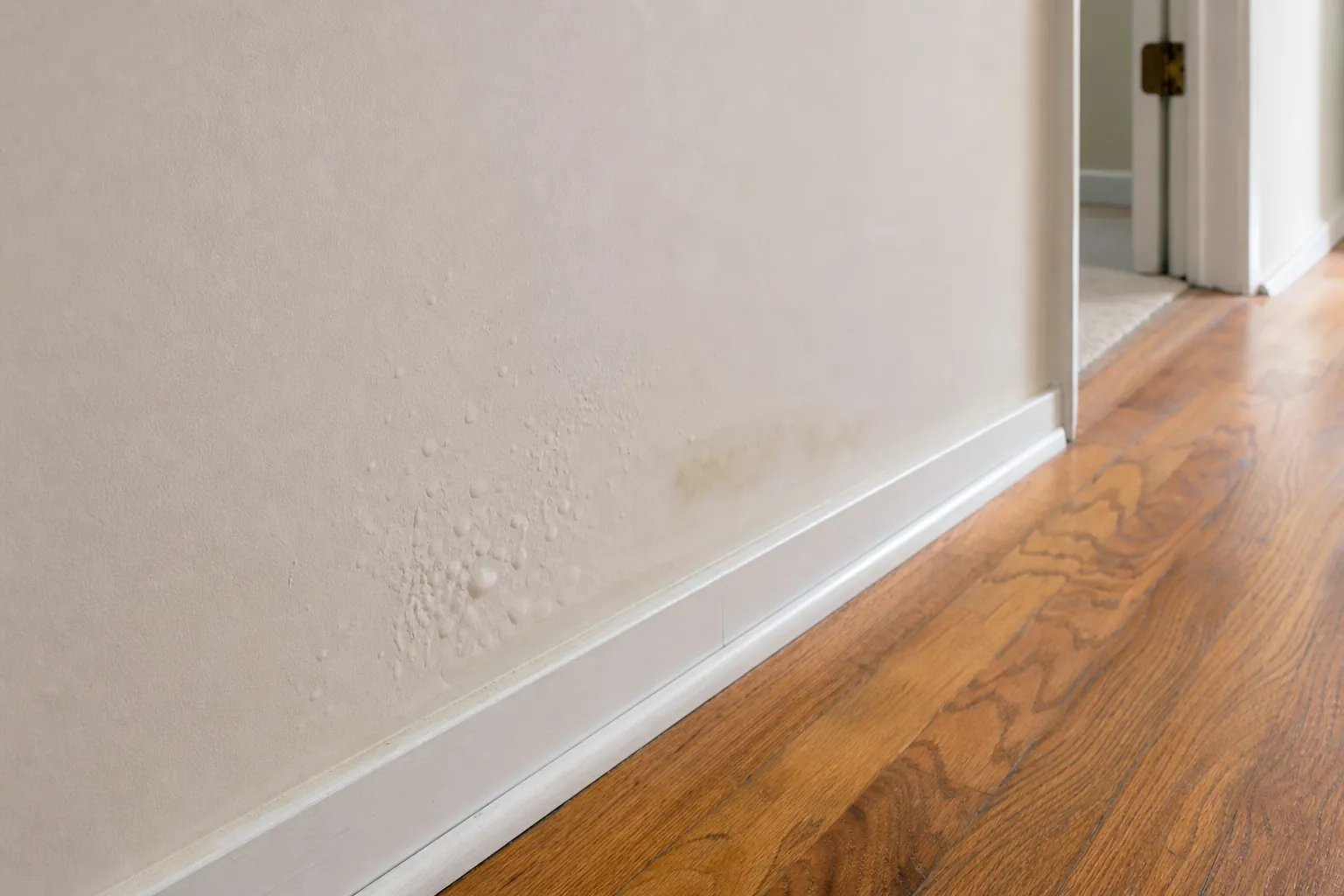
Water damage inside a wall rarely announces itself with a dramatic puddle. More often, it starts with a small change that is easy to explain away: paint that bubbles near a baseboard, a faint yellow mark, trim that no longer sits flat, a musty smell after rain, or a patch that feels cooler than the rest of the room. Those signs do not prove a major loss, but they are a reason to investigate the source before the wall is painted, sealed, or covered. A careful response starts with safety, timing, and the clues you can check without taking the house apart.
What Early Wall Water Damage Looks Like
Water can enter a wall from a plumbing leak, a roof or window problem, an appliance connection, an HVAC condensate line, groundwater, or repeated bathroom moisture. As drywall, wood trim, insulation, and flooring edges absorb moisture, they often change shape or finish before water becomes visible in the middle of the room.
Look for a change that is new, localized, growing, or linked to a predictable event. Common early signs include a brown, yellow, or gray stain; peeling or bubbling paint; a soft spot; a raised or swollen baseboard; a gap where trim meets the wall; warped floor edges; damp carpet near a wall; or a persistent stale smell. The site's guide to common water-damage signs can help you compare those clues with ceiling stains, swelling, and other visible changes.
A water stain may be old and dry, while fresh bubbling can be caused by humidity, poor paint adhesion, or a past repair. The useful question is not, “Can I identify this from color alone?” It is, “Is this changing, and what seems to trigger it?” A mark that gets darker after rain, shower use, a dishwasher cycle, or running a washing machine deserves more attention than a stable mark with no other symptoms.
Start With Safety, Not Demolition
Do not open a wall or pull off trim when the area is wet, near an outlet, beside an appliance, below a sagging ceiling, or affected by sewage or floodwater. Water and electricity can create an immediate hazard, and cutting into a wall can expose wiring, plumbing, insulation, dust, or contaminated materials. The Federal Emergency Management Agency's flood guidance also warns against touching electrical equipment when water may be present.
Move belongings away from an active drip or damp floor only when you can do so safely. If there is standing water, a soft floor, a bulging wall, or water around electrical equipment, keep people out of the area and contact emergency services for an immediate hazard. For an active supply-line or fixture leak, a qualified plumber may be the right first call. A roof leak after rain usually needs a roofer to stop the entry point before restoration work can make sense.
For a stable, dry-looking wall, take clear photos before cleaning, sanding, or painting. Include a wide room photo and a close-up. Then note when you first noticed the change and what had happened nearby, such as rain, a shower, a toilet overflow, or appliance use. This is useful evidence for a repair professional or an insurance conversation, and it lets you compare the same spot over time.
Watch the Pattern Around the Wall
Timing is often more informative than the stain itself. A wall problem that appears after heavy rain may point toward the roof, a window, exterior siding, a foundation issue, or drainage. A wall shared with a bathroom, kitchen, laundry room, or water heater may change after a fixture or appliance runs. A problem under an attic, near an air handler, or close to a condensate line can be related to HVAC equipment.
Recheck the area after the likely trigger, not every few minutes. If the patch becomes darker after a shower, run the shower once and look from a safe, dry position. If it follows rain, compare photos after the next storm. If it is near a dishwasher or washing machine, notice whether it changes after a normal cycle. This does not replace a professional assessment, but it can help separate a one-time spill from a recurring source.
Water does not always show up directly below where it entered. It can run along framing, pipes, wiring, the back of drywall, or flooring before finding a lower point. That is why a swollen baseboard or soft corner may be the first visible sign of a leak farther away. A musty odor can add useful context, and the site's water-damage smell guide explains how to treat odor as a clue without assuming it proves mold.
Clues You Can Check Safely
Stay with areas you can inspect from a dry floor without moving heavy appliances, climbing, or disassembling equipment. Use a flashlight to look at lower walls, baseboards, cabinets, the floor edge, and accessible plumbing. You are looking for evidence that the wall concern has a source, not trying to diagnose every possible problem yourself.

- Baseboards and flooring: Check for trim that swells, separates, or softens, plus warped flooring, loose transitions, or damp carpet edges.
- Walls and paint: Look for a new stain, a darker patch, bubbling or flaking paint, a soft surface, or a wall that is cool and damp compared with nearby areas.
- Cabinets and plumbing: Check accessible cabinet bottoms and shutoff valves for a fresh drip, a wet panel, rust, or a change after normal fixture use.
- Exterior timing: Note whether the concern follows rain, wind-driven weather, an overflowing gutter, or a known roof or window problem.
- Adjacent rooms: Think about what is behind, above, or below the wall. A bathroom, kitchen, laundry room, attic, or garage can offer a more likely source than the visible finish.
Do not press aggressively on a soft wall, pull loose paint, or treat a moisture meter reading as a full diagnosis. A meter can be useful in trained hands, but it cannot tell you the water source, the condition behind every part of the wall, or whether contamination is present. The practical goal is to identify a reason for concern and stop more water from entering.
Check Accessible Plumbing and Appliances
Many hidden-wall concerns begin near a fixture or appliance. Under a sink, around a toilet, behind a refrigerator, beside a dishwasher, near a washing machine, or at a water heater, look for fresh drips, a wet cabinet bottom, rust, a loose supply connection, or swelling at the floor edge. If you see active water, stop using the fixture when it is safe and arrange the appropriate repair.

There is a difference between an accessible plumbing check and a repair. Do not disconnect a drain, remove a dishwasher, shift a water heater, or reach behind a wet appliance to chase a suspected leak. A heavy appliance can damage weak flooring, and a quick adjustment can make the source harder to identify. If the wall concern follows a toilet overflow, use the site's toilet-overflow cleanup guide for the first safety and documentation decisions.
For rain-related concerns, inspect the exterior from the ground for obvious gutter overflow, roof damage, or trouble around a vent or window. Do not climb onto a wet roof or enter an attic without safe access, lighting, and secure footing. The site's roof-leak guidance covers the questions worth documenting before a repair begins.
Do Not Paint Over the Evidence
Paint, caulk, fragrance, carpet powder, and a quick patch can make a room look or smell better for a short time. None of them confirms that the source was fixed or that the wall cavity is dry. Covering a new stain also removes the easiest way to see whether the condition returns after rain, plumbing use, or an appliance cycle.
Avoid using bleach or strong cleaners as a substitute for correcting moisture. The Centers for Disease Control and Prevention explains that mold grows where there is a water or moisture problem. That makes controlling the water source the priority. If you see visible mold, an odor keeps returning, or the source is unclear, do not assume a surface cleaner has solved the problem behind the wall.
For a visible ceiling stain connected to the same concern, see Water Stain on Ceiling: What It Means and What to Do. It explains why a cosmetic repair should wait until the source and drying plan are clear.
Drying Comes After the Source Is Stopped
Once the source is repaired and the area is safe, drying becomes the next decision. The U.S. Environmental Protection Agency advises drying water-damaged areas and items within 24 to 48 hours after a leak or spill when possible, because moisture control is the basis of mold control. Its guide to mold and moisture in the home is a useful reference for understanding why surface dryness is not the same as a completed drying plan.
Drywall, insulation, wood framing, carpet padding, and flooring underlayment can retain moisture after a wall feels dry to the touch. In a small, clean-water situation with a fixed source and stable materials, controlled airflow and dehumidification may help. They do not make an active leak safe, prove that a wall cavity is dry, or make sewage or floodwater appropriate for ordinary household cleanup.

Do not aim fans into an unstable wall, keep running equipment while the spot worsens, or replace flooring and trim before the moisture question is resolved. The site's water-extraction overview explains why removing visible water and confirming material drying are separate parts of a water-damage response.
When a Wall Concern Needs Qualified Help
Bring in qualified help when you have active water, a soft or bulging wall, water near electrical equipment, repeated staining, a musty odor that returns, visible mold, sewage or floodwater, damage you cannot safely inspect, or a source you cannot identify. It is also reasonable to ask for help when a wall concern keeps returning after an obvious repair. Repeated symptoms can mean water is traveling from somewhere else or materials remained wet.
Ask direct questions before authorizing work: What is the likely source? Which materials are affected? How will dryness be checked? What can stay, and what needs removal or replacement? What could change the scope? A trustworthy answer should separate emergency water control, source repair, drying, and cosmetic reconstruction instead of treating every stained wall as the same job.
US Water Damage Pros helps homeowners understand the service categories they may hear about after a water event, including extraction, structural drying, remediation, and repair. Review the service overview, or call 1-877-264-7045 when the situation is urgent or the next step is unclear.
A Simple Checklist for Suspected Wall Water Damage
Use this sequence to keep the response focused on the cause, not just the visible mark.
- Make the area safe: Stay clear of water near electricity, standing water, soft floors, or unstable ceilings and walls.
- Record the change: Take wide and close-up photos before cleaning, painting, or moving damaged materials.
- Notice the trigger: Track rain, plumbing use, showers, toilet flushing, or appliance cycles that happen before the concern changes.
- Check safe, accessible clues: Look at baseboards, floor edges, cabinets, accessible plumbing, and nearby rooms without opening walls or moving heavy appliances.
- Stop the source: Use the right repair professional for the likely cause, such as a plumber for an active fixture leak or a roofer for rain entry.
- Dry and reassess: Confirm materials are dry and stable before repainting, sealing, or replacing finishes.
- Escalate when needed: Get qualified help for recurring signs, hidden moisture, contamination, or anything that cannot be checked safely.
Frequently asked questions
What are the first signs of water damage in a wall?
Early signs can include bubbling or peeling paint, a new stain, swollen trim, a musty smell, a cold or damp-feeling spot, soft drywall, warped flooring at the wall edge, or a change that follows rain or plumbing use. One clue does not prove a hidden leak, but a new or repeating pattern is worth checking before you paint over it.
Can water damage be behind a wall without visible mold?
Yes. Moisture can be inside a wall before there is visible mold, staining, or a strong odor. A slow leak may wet drywall, insulation, framing, or the back of a baseboard first. The right response is to find and stop the moisture source, then decide whether the materials can be dried or need a closer assessment.
Should I cut open a wall to look for water damage?
Do not cut into a wall just because you suspect moisture. First check safe, accessible clues and the timing around rain, plumbing fixtures, appliances, or HVAC equipment. Bring in qualified help when the source is unclear, the wall is soft or wet, there is a safety concern, or opening the area could expose wiring, contamination, or a larger problem.
Can I paint over water damage on a wall?
Painting should be the final cosmetic step, not the investigation. First confirm that the source was repaired, the wall and surrounding materials are dry and sound, and the area stays stable through the likely trigger. A new stain, bubbling paint, or musty odor after repainting is a reason to look again for moisture.
Related posts
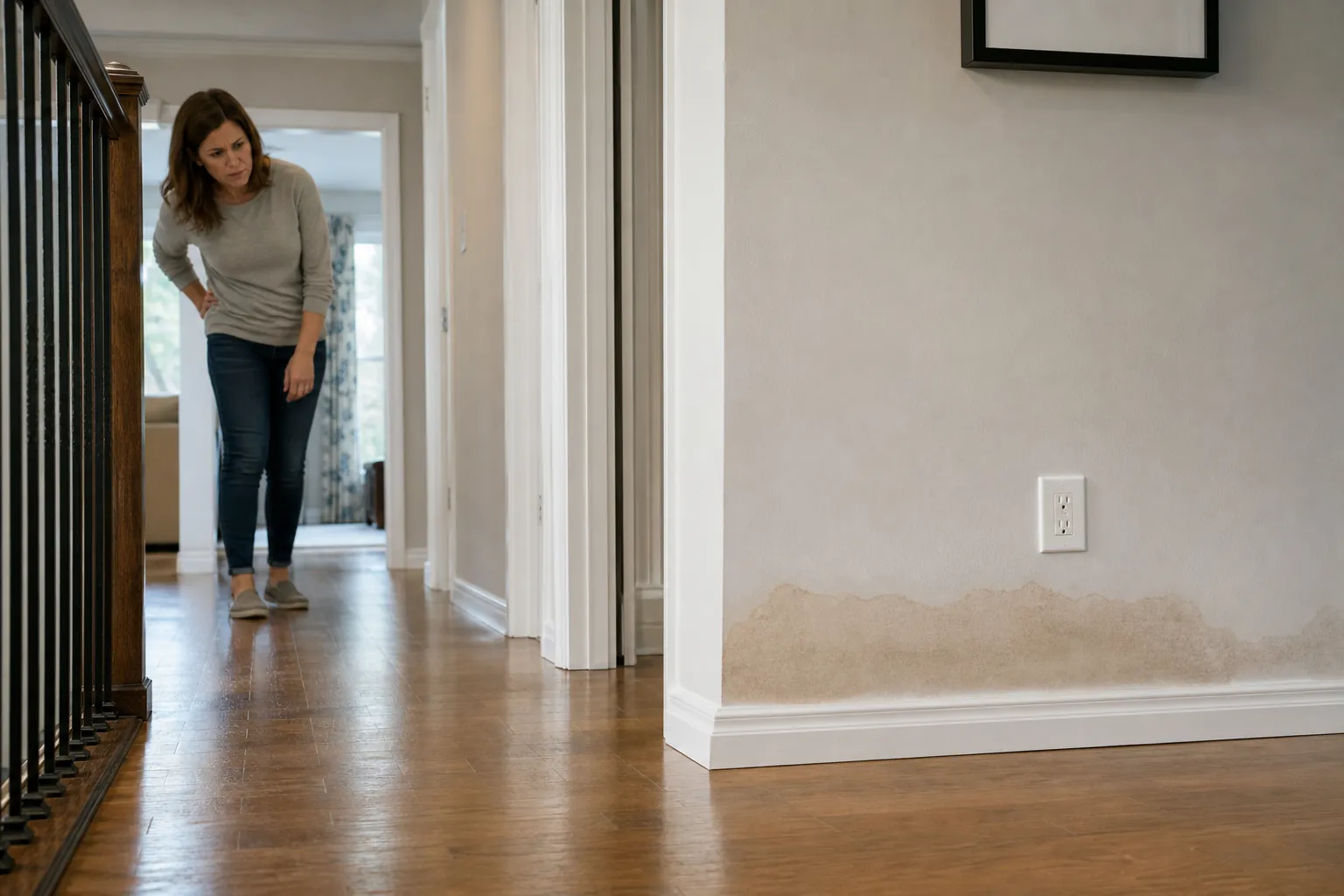
Water Damage Smell: What It Means and What to Do
A persistent musty odor can point to hidden moisture. Learn how to investigate safely, what not to do, and when drying or qualified help is needed.
Read the guide →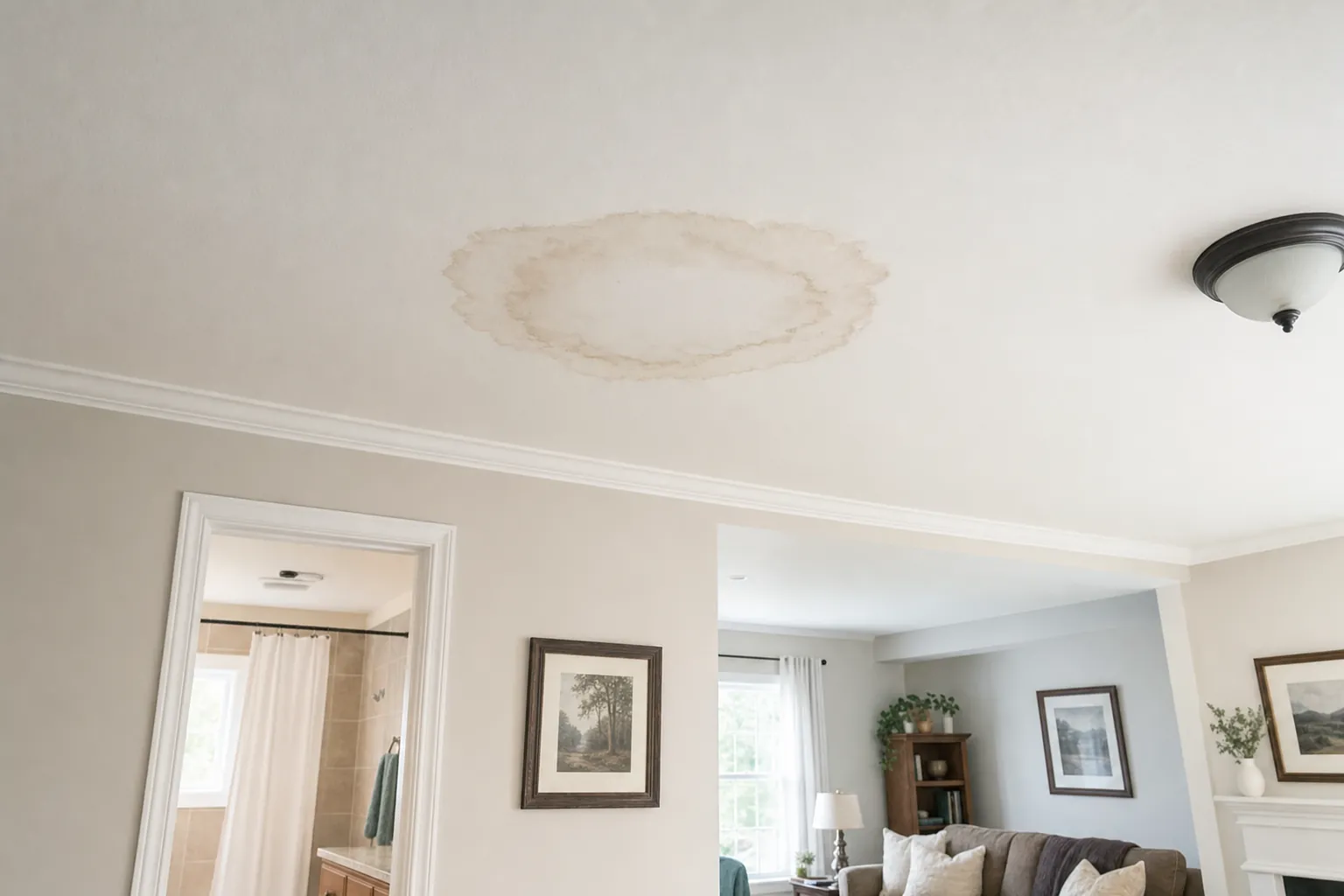
Water Stain on Ceiling: What It Means and What to Do
Learn what a ceiling water stain can signal, how to judge the urgency, and the safer next steps before repairing or repainting.
Read the guide →