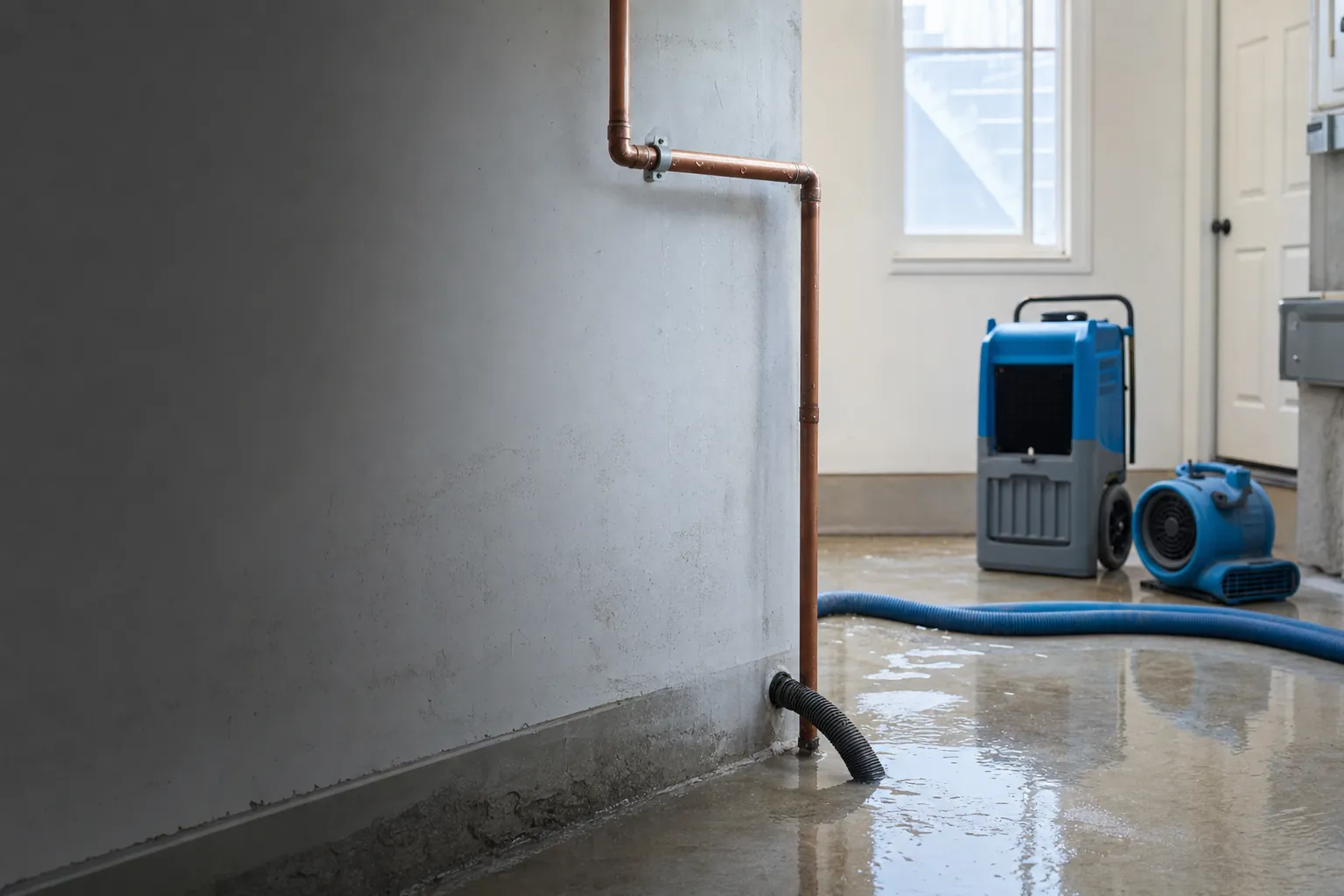
Start with people, power and the water source.
Do not step into standing water when outlets, appliances, extension cords, a furnace, a water heater or an electrical panel may be involved. If you can safely reach the main water shutoff without entering the wet area, turn off the water. If you cannot do that safely, leave the area and seek qualified help. Keep children and pets away from wet rooms.
A burst pipe may continue leaking behind a wall, above a ceiling or beneath a floor even after the obvious flow slows down. Note where water is visible, but do not open walls, climb into an attic or pull apart building materials just to investigate. The immediate goal is to stop further water where it is safe, avoid injury and preserve the condition of the property for a proper assessment.
Document the loss before cleanup changes the scene.
From a dry, safe location, take wide photos and short videos of the broken pipe if it is visible, the path of the water, affected rooms, ceiling stains, floors, furniture, stored belongings and damaged finishes. Then take closer photos of water lines, warped materials, wet contents and any equipment that may have been affected. This creates a useful record before extraction, moving crews or demolition changes what can be seen.
Write down when you found the leak, when the water was shut off, what rooms were involved and any steps you took to protect the property. Keep receipts for reasonable emergency measures. If you plan to make an insurance claim, contact the insurer early and ask what it needs documented. Do not discard damaged belongings before you have recorded them and understand the next steps.
Do not judge the problem by the puddle alone.
The visible water is only part of a burst-pipe cleanup decision. Water can travel below flooring, behind baseboards, through wall cavities, into insulation, under cabinets and into ceilings below the break. A room can look much better after standing water is removed while moisture remains in materials that need further attention.
Ask the provider how it will assess the path of water, not only the room where the pipe broke. The response should separate what is already known from what may need closer inspection. That helps you understand why some materials can be dried in place while others may need to be removed, monitored or evaluated by a different repair professional.
- Which rooms and building materials were affected above and below the visible water line?
- What water source was identified, and is it fully stopped or isolated?
- What will be extracted, dried, cleaned, removed or monitored?
- How will moisture be checked before repair materials are installed?
- What work is included now, and what conditions could change the scope or cost?
Protect belongings without spreading the damage.
Move dry, unaffected belongings only when the route is safe and clear. Avoid carrying wet items through dry areas, stacking wet contents against walls or placing them on materials that can be damaged by moisture. If electronics, documents, upholstered furniture, rugs or valuable items were exposed, photograph them before moving them and ask what can be safely evaluated, cleaned or dried.
Do not assume a household fan or a few open windows solve a larger loss. Air movement may be part of a drying plan, but it does not show what is happening behind finishes or under flooring. Before putting belongings back or replacing rugs, trim or furniture, ask what confirms that the affected area has been properly assessed and dried.
Ask for a drying plan you can understand.
Water extraction is the step that removes visible and accessible water. Drying is the follow-up work used to address moisture left in materials and the air. A responsible provider should explain the areas it is monitoring, the equipment it is using, how progress will be measured and what has to happen before cosmetic repairs begin.
You do not need to become a restoration expert to make a sound decision. Ask for plain explanations of the immediate work, the materials that need attention, the signs that the plan may change and the point at which a plumber, electrician, flooring contractor or other professional needs to take over. Clear handoffs help prevent the cleanup from ending while the cause of the leak or the remaining repair work is still unresolved.
Keep the repair decision separate from the cleanup decision.
A burst-pipe cleanup may reveal damage that needs rebuilding, but replacing drywall, flooring, cabinets or paint too early can hide moisture or make a later repair more difficult. Ask what confirms the cleanup and drying stage is complete, and which repairs are outside the current scope. The plumbing repair that prevents another leak is also a separate decision from the work used to address the water already in the home.
Compare the work proposed, not simply the first price or the fastest promise. A useful scope identifies the affected areas, the immediate safety measures, extraction and drying work, monitoring approach, repair boundaries and the process for approving changes. Before hiring, verify licensing, insurance, availability and the details of the written scope for your area.
Frequently asked questions
What should I do first when a pipe bursts?+
Keep people away from standing water and electrical hazards. If you can safely reach the main water shutoff without entering the wet area, turn off the water. Then document the damage from a safe location, protect unaffected belongings where practical and contact qualified help if the loss is more than a small, contained spill.
Can I clean up water from a burst pipe myself?+
A small, contained clean-water leak is different from water that has reached finished rooms, ceilings, electrical equipment, insulation, flooring or wall cavities. Do not rely on surface drying alone when water may be hidden. A qualified assessment can clarify what needs extraction, drying, monitoring or repair.
How long does burst-pipe cleanup take?+
The timing depends on how long the pipe leaked, how far the water travelled, the materials involved and whether the source has been repaired. Visible water removal may happen quickly, while drying and moisture checks can take longer. Ask the provider how it will explain progress and what confirms the property is ready for repairs.